Materials
Genuine Leather vs PU for Leather Toiletry Bags: Which Should Your Brand Choose?
By the India Leather Manufacturer production teamUpdated 17 min read
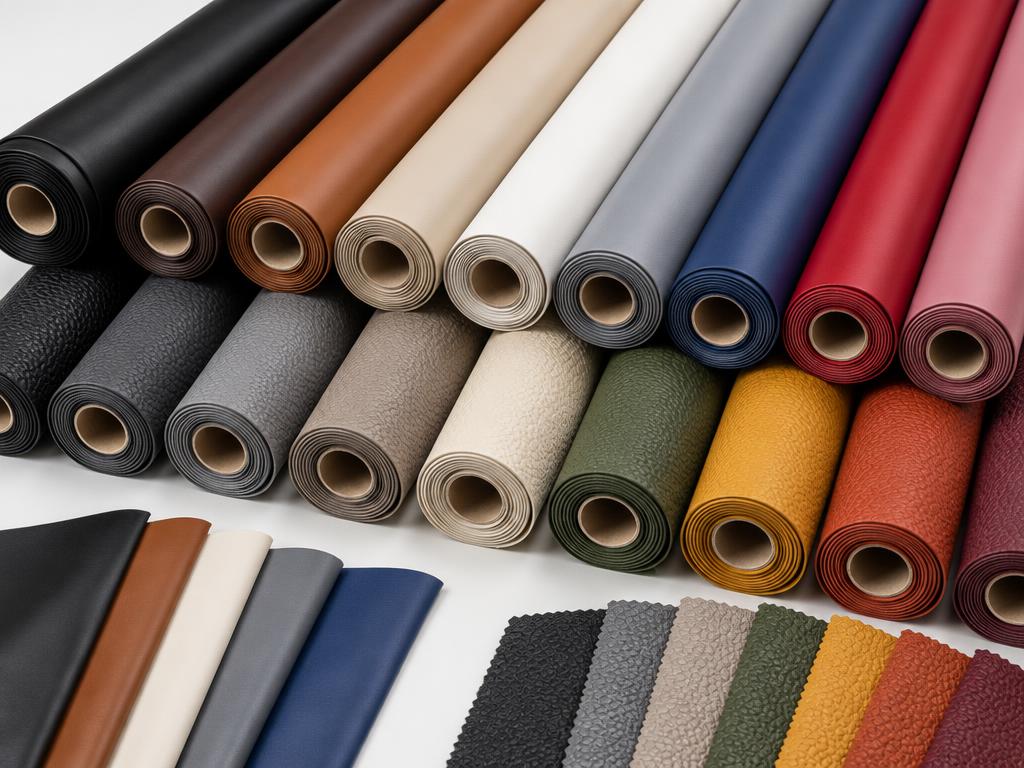
Quick answer
Choose genuine leather for leather toiletry bags when longevity, patina and premium positioning matter, and when you want a deep blind deboss; choose a microfibre or coated PU when colour range, batch consistency, weight and price matter more, or when the range is vegan-positioned. The decisive detail on this product is the zip: leather wears there gradually, while an economy PU can delaminate at that point. Many brands run the same pattern in both as a good-better range.
Key takeaways
- Specify the article, not the adjective — PU face thickness, backing type and grain matter as much as a leather article and substance.
- Leather fails gradually and visibly; PU fails suddenly at a flex point, and the backing grade is what decides when.
- Deboss belongs to leather, foil belongs to a smooth PU face, and laser needs a trial on either.
- Leather shade varies lot to lot; PU is consistent within an article but the article itself can be discontinued.
- Most vegan leather is PU — make only the claim you can evidence with a supplier declaration.
- One pattern can run in both materials, which is the cheapest way to hold two price points.
What the two materials actually are
Most material arguments are really vocabulary arguments. Before deciding anything for leather toiletry bags, it is worth being precise about what is on the table, because the words used in trade — genuine leather, real leather, vegan leather, PU — cover a very wide range of quite different products.
It is also a decision that gets made style by style rather than once for a whole range. A cosmetic pouch and the rest of the line — dopp kit, hanging wash bag, cosmetic pouch — do not all want the same material, and the brands that handle this well choose per style against a price point instead of declaring a house material and living with it.
Genuine leather, by grade
Full-grain keeps the hide's outermost surface intact, marks and all, and is the grade that develops a patina. Top-grain has had that surface lightly corrected and sanded, which makes it more uniform and slightly less durable. Corrected-grain has been sanded further and given an embossed grain, so it is consistent and cheaper but has lost most of the natural character. Split leather comes from the lower layers and is a different material in behaviour, whatever it is called on a label.
Tannage matters as much as grade. Vegetable-tanned leather is firmer, darkens with light and holds a deep crisp deboss, which is why heritage ranges use it. Chrome-tanned leather is softer, more colour-stable and more water-tolerant, and takes a wider colour range. For leather toiletry bags we normally work with: full-grain and top-grain cow or buffalo for bodies, waxed and pull-up finishes where scuffs should blend in; PU and vegan options for high-volume gifting ranges.
PU and coated materials, by construction
A PU material is a polyurethane face layer on a backing — woven or non-woven — and both halves matter. The face determines grain, hand and abrasion resistance; the backing determines tear strength and how the material behaves when it is folded or stitched. Microfibre PU, where the backing is a non-woven microfibre structure rather than a simple cloth, is a genuinely different product from an economy PU on a thin knit, and it is the grade worth specifying for anything in daily use.
This is why a quotation against the word PU is not comparable with anything. Ask for the article, the face thickness, the backing type and the grain, in the same way you would ask for a leather article and substance.
Substance and hand on a toiletry bag
The right material for a product is partly a question of what substance the construction needs, and whether the material behaves well at that substance. On leather toiletry bags the normal range is 1.2–1.8 mm (3–4.5 oz) for panels and 2.0–3.0 mm (5–7.5 oz) for handles, straps and base reinforcement.
At that substance, genuine leather gives a firm hand that holds a fold and relaxes into shape with use. PU at a comparable thickness is more uniform, lighter, and does not relax in the same way — which is sometimes exactly what you want and sometimes the thing that makes a piece feel cheap. The deciding factor is usually the construction: clicker-cut panels, skived seams, reinforced handle and strap anchors, optional base board, feet and corner protection.
On this product the lining is part of the material decision rather than a detail underneath it, because it is doing structural work as well as protective work: coated, wipe-clean lining as standard, since this bag gets wet; uncoated twill only if you specifically ask.
How the material choice changes the rest of the spec
On a travel piece the material decides the empty weight and the way the bag ages, but the construction decides whether it survives. Heavier hide needs stronger anchors and a reinforced base; PU needs the same anchors with webbing behind them, because the load is carried by the backing rather than by the face. Specify the anchors against the material, not against the silhouette.
Luggage-grade zips in #5 and #8, D-rings, swivel snaps, buckles, rivets and base studs in antique brass, nickel or gunmetal. Hardware is worth settling alongside the material rather than after it. A plating that reads warm and expensive against a tan full-grain can look cheap against a flat black PU, and the reverse is just as true, so we normally show the hardware on both materials at sampling when a brand is running a good-better range.
Turned edge on lined panels, edge paint on straps and pulls, bound edge on padded sections. Edge treatment is the clearest technical difference between the two materials on this product. A painted or burnished edge belongs to genuine leather; on PU a turned edge or a heat-sealed cut edge is normally the correct build. Asking for painted edges on PU is one of the more common ways a specification quietly becomes unmanufacturable.
- Wipe-clean interior — The whole point of a dopp kit is that it survives a leaking bottle. We spec a coated lining and taped internal seams by default.
- Opening & gusset — A wide zip opening with a boxed gusset lets the bag stand open on a narrow hotel shelf — the single most useful detail on this product.
- Hanging format — Hanging wash bags add a swivel hook and fold-out panels with elastic loops and zip pockets; panel count is set on the tech pack.
Specification rows that move with the material
Those are the rows we most often have to revisit when a brand switches material part-way through a project. None of them is a finishing decision — each is a pattern or a tooling decision — so changing material after sample approval usually means a second sample rather than a substitution.
Genuine leather and PU compared for leather toiletry bags
Direction only — we do not publish figures, because the spread within each material is wider than the gap between them. A premium microfibre PU can cost more than a modest split leather, and both can be the right answer.
| Consideration | Genuine leather | PU and coated materials |
|---|---|---|
| Hand and appearance | Natural grain with visible variation; develops patina and darkens at wear points | Uniform surface in any grain you specify, including grains that do not exist in nature; stays as it started |
| Durability on this product | Longest service life when the substance is right, and wear reads as character rather than outright failure. Put the specification effort into the zip. | Good in microfibre grades, shorter in economy grades, where the face can delaminate from the backing at the flex points |
| Weight before anything is packed | Heavier, and on a large travel piece you notice it empty | Noticeably lighter at the same panel area, which matters against a cabin weight allowance |
| Wet and abrasion in transit | Waxed and pull-up finishes let scuffs blend in and recover; prolonged wet has to be dried properly | Wipes clean and shrugs off splashes, but an abrasion through the face is permanent and obvious |
| Cost direction | Higher, and more variable — driven as much by yield as by the hide price | Lower and far more predictable, because a roll has no defects to cut around |
| Colour range | Wide, but constrained by what the tannery runs; deep blacks and browns are easiest | Effectively unlimited, including metallics, pastels and two-tone effects |
| Batch consistency | Shade varies hide to hide and lot to lot; matching across a set or a repeat takes active management | Consistent within a roll and across rolls of the same article, which is why it suits large uniform programmes |
| Blind deboss | Excellent, especially on vegetable-tanned leather, which takes a deep crisp impression that darkens at the edges | Shallow and softer; a heavily finished PU can resist a die and the impression can relax over time |
| Hot foil | Good; coverage and crispness depend on the tannage and the finish, so it is always trialled first | Very good — a smooth uniform face is the easiest surface foil can land on |
| Laser engraving | Excellent for fine detail and small type, and the method we use for per-piece names and serial numbers | Possible but handled with care, since a laser can scorch or melt a polyurethane face; a trial is essential |
| Care in use | Wipe, condition occasionally, keep out of prolonged wet; scratches can often be worked out | Wipe clean with a damp cloth; no conditioning needed and none effective; damage to the face is permanent |
| Typical positioning | Premium and heritage ranges, and anything sold on longevity — cosmetic pouch designs for grooming brands sit here naturally | Fashion, promotional, uniform and vegan-positioned ranges, and anywhere colour count matters more than lifespan |
Where leather toiletry bags wear out — and how each material fails there
A material decision is really a decision about one or two specific places on the product. These are the parts that fail on this one:
- The zip, opened and closed in a hurry over a packed bag
- The internal seams, which is where a leak escapes if they were not taped
- The base, which sits on wet hotel counters
How genuine leather fails
Leather fails slowly and visibly. The finish wears through at the points of highest contact, the fibre structure stretches at a slot or an anchor, and a fold cracks if the panel was never skived thin enough. Almost all of it is gradual, which is why a leather piece is usually retired rather than broken — and why the substance and the skiving in the specification matter more than the hide price.
How PU fails
PU fails suddenly and at a point. The face layer separates from its backing at a flex line, or abrades through at a corner, and once it has started there is no repair and no patina — the product simply looks damaged. Economy grades on thin knit backings do this in months at a fold; microfibre grades on a proper non-woven backing can last years. This is the single most important distinction in the PU decision, and it is invisible in a photograph.
What we do about it either way
Zip cycling & pull strength: long zip runs are cycled and the pulls loaded, since on travel pieces the zip is the part that gets used hardest and fails first. Capacity & fit check: pieces are packed out and measured against the approved sample so the finished internal space matches what your listing will promise. Handle & strap load: handles, D-rings and shoulder straps are loaded on sampled pieces to confirm the anchor points hold with the bag full. Those checks are run whichever material you choose, because the failure modes differ but the stress points do not.
How each material takes your branding
Branding behaviour is often the deciding factor, and it is the one buyers test last. On leather toiletry bags the mark normally sits on the front panel or a leather pull tab, and the method should be chosen for the material rather than the other way round.
A blind deboss on vegetable-tanned leather is the best-looking mark available in this trade: the die compresses and darkens the leather, and the result deepens with handling. The same die on a heavily finished chrome-tanned article gives a shallower impression, and on a PU face it can relax back within weeks. Hot foil is the opposite — it loves the smooth uniform surface of a PU or a finished leather, and is harder to land cleanly on an open-pored full-grain. Laser holds the finest detail on leather and needs careful power settings on PU, where too much heat scorches or melts the face.
Whichever way you go, ask for the branding trial on your actual material at the size you intend to sell. It is the cheapest correction available and it is almost never done early enough.
Colour, consistency and the repeat-order problem
Two to four colours per style at MOQ; a common hardware plating across the range keeps the set looking like a family.
The repeat order is where the two materials diverge most sharply, and it is the part of the decision that catches brands out. A leather shade is matched to a reference, not reproduced exactly: hides vary, lots vary, and a repeat order six months later lands close rather than identical. That is normal, it is managed by matching to a retained physical reference rather than to a screen, and on a full-grain article a degree of variation is part of what you are selling.
PU has the opposite profile. Within an article it is extremely consistent, which is why uniform and corporate programmes live there — but the articles themselves get discontinued by mills without notice, and the replacement is never quite the same grain or hand. For a repeat programme we reserve material against your forecast rather than re-sourcing mid-season. Brands that skip that step find out on the second order, not the first.
Care, and what to tell your customer
Care instructions are part of the product, and getting them wrong generates returns that have nothing to do with manufacturing quality. The two materials need opposite advice, so the care card has to follow the material rather than the brand template.
- Genuine leather: wipe with a dry or barely damp cloth; condition occasionally and sparingly; dry naturally away from direct heat if it gets wet; expect darkening and patina at contact points
- Genuine leather: do not use household cleaners, solvents or alcohol wipes, which strip the finish and leave a permanent pale patch
- PU and coated materials: wipe clean with a damp cloth and a mild detergent; nothing needs conditioning and conditioners do not help
- PU and coated materials: avoid prolonged heat and direct sun, which embrittles the face layer and accelerates delamination at folds
- Both: store with the piece stuffed or supported rather than folded flat under weight, and out of a sealed plastic bag
- Both: on leather toiletry bags specifically, the parts worth mentioning on the care card are the zip and the internal seams
- Dry the piece naturally after a wet trip, stuffed and away from a radiator, rather than packing it damp
- Run the zip clean occasionally — grit in a long tape run is what makes a slider catch at the corners
Vegan, recycled and bio-based options
Most material described as vegan leather is PU, and the honest version of that claim is simply that it is animal-free. Beyond standard PU there are recycled-backed materials, where the textile backing uses recycled content, and a growing set of bio-based materials that blend plant inputs — cactus, apple, grape, cork — with a polyurethane binder. They are real options with real trade-offs: hand and appearance are often good, durability varies a great deal by article, and availability and minimum quantities are less reliable than mainstream PU.
On the leather side, the equivalent asks are chrome-free or vegetable tanning, leather from tanneries with traceable sourcing, and REACH-compliant dyes and finishes. We can source to those requirements and we document what the material is, with supplier declarations and material statements on request, so your own marketing claims are supported by something.
Which material for which market position
There is no universally correct answer, only an answer that matches a price point and a promise. These are the four positions we see most often on leather toiletry bags.
Premium and heritage: full-grain, often vegetable-tanned
If the product is sold on longevity and the customer expects it to age, this is the only honest choice. Expect shade variation between pieces, specify the substance properly, and lean into the deboss — a deep blind mark on vegetable-tanned leather is the clearest signal of this position there is. cosmetic pouch designs for grooming brands typically sit here.
Mid-market retail: top-grain, with structure doing the work
The commercial middle of this category. A good top-grain article with a well-specified interior and consistent hardware reads as a quality product at a reachable price, and it repeats reliably because the article is a stock one. This is where most private-label programmes land, and where the interior specification earns more than a hide upgrade would. On leather toiletry bags the interior in question is: coated, wipe-clean lining as standard, since this bag gets wet; uncoated twill only if you specifically ask.
Volume, promotional and uniform: microfibre or coated PU
When colour count, consistency and price are the requirement — gifting, promotions, uniform programmes, supermarket and marketplace ranges — PU is the right material and not a compromise. Specify a microfibre grade if the piece gets daily use, reserve the article against your forecast, and accept that the product will be replaced rather than conditioned.
Vegan-positioned retail: specify the article, not the adjective
If animal-free is the selling point, the material becomes part of your brand story and will be scrutinised. Choose a named article you can describe, get the declarations, and resist the temptation to imply more than the material delivers. A clearly described recycled-backed PU is a stronger position than a vaguely described bio-based blend.
Or run both, from one pattern
The same pattern can be produced in genuine leather and in PU, and running both is the most common structure we see — genuine leather for the core line, PU for seasonal, promotional or vegan ranges. It shares the pattern work, keeps the silhouette consistent across the range, and lets you hold two price points without designing twice. The hardware and the interior usually need adjusting between the two, so sample both rather than assuming one translates.
Ready to start your order?
Send your brief and get a quotation and sampling plan within one working day.