Service
Custom Branding for leather goods
Every way we can put your mark on leather, and an honest view of which one suits your artwork, your leather and your price. Tooling is made once and kept on record, and nothing goes into production until you have approved a strike-off on the actual material.
- Methods available: 7
- Artwork needed: Vector, fonts outlined
- Strike-off: On your leather, before bulk
- Tooling: Made once, kept for repeats
- Capacity
- 60,000+ pieces / month
- MOQ
- From 100 pieces per design
- Sampling
- Samples in 7–12 days
- Production
- Bulk in 30–45 days
- Reach
- Exporting to 55+ countries
- Team
- 180+ skilled artisans
What's included
What Custom Branding covers, and what it does not
Branding is where a private label product stops looking generic, and it is also where most of the avoidable disappointment happens: a logo with hairlines too fine to deboss, a foil on a high-wear edge, a laser mark on an oily leather. Choosing the method against the artwork and the leather is the whole job.
- Methods available
- 7
- Artwork needed
- Vector, fonts outlined
- Strike-off
- On your leather, before bulk
- Tooling
- Made once, kept for repeats
What we do
Inside the quoted price
- Check your artwork and tell you where it will not reproduce at the size you want
- Recommend a method against the leather, the placement and the wear it will see
- Make the tooling: brass debossing die, foil plate or etched metal logo plate
- Strike off on your actual leather, in your colour, before anything is branded in bulk
- Apply the mark in-line during production, checked against the approved strike-off
- Brand hardware, linings, swing tags, dust bags and packaging to match
- Handle per-piece personalisation by laser or changeable foil type where a job needs it
- Keep the die on record so repeat orders and new styles at the same size skip tooling
What you provide
To start the job
- Vector artwork — AI, EPS, PDF or SVG — with fonts outlined and at final size
- The placement and size you want, or permission for us to recommend one
- A foil colour reference, or confirmation that the mark is a blind deboss
- Confirmation that you hold the rights to the artwork
- Which surfaces the mark goes on: leather, lining, hardware, tag or packaging
What you receive
Deliverables
- A production-ready version of your artwork, with any changes we had to make listed
- A physical strike-off card on your leather, or the mark applied to your sample
- A recommendation with the trade-offs stated, not just a price
- Branding applied consistently through the run, position-checked in-line
- Your tooling retained and referenced by logo and size for future orders
Compare
Custom Branding against our other four services
All five run through the same factory, the same artisans and the same inspection. What changes is who owns the design, how much set-up it needs and how fast you can be in market.
OEM Manufacturing
- Whose design
- Yours, to your tech pack
- Tech pack needed
- Yes, or a counter-sample
- Typical MOQ
- From 100 pcs per design
- First sample
- 7–12 days (pre-production sample)
- Branding depth
- Exactly as specified, incl. nominated hardware
- Lead time
- 30–45 days after the sealed sample
- Best for
- Brands with their own designs, materials and QC standard
Private Label
- Whose design
- Ours, already proven in production
- Tech pack needed
- Not needed
- Typical MOQ
- From 100 pcs per design, colours mixable
- First sample
- 7–12 days, branded
- Branding depth
- Logo, colour, lining, hardware, packaging
- Lead time
- 30–45 days after sample approval
- Best for
- Launching or extending a range without design work
- This service
Custom Branding
- Whose design
- Either — applied to any order
- Tech pack needed
- Logo artwork only
- Typical MOQ
- Follows the product MOQ
- First sample
- Strike-off alongside the sample
- Branding depth
- Every method we offer, on any surface
- Lead time
- Inside the production window
- Best for
- Putting a consistent mark across a whole range
Sampling & Prototyping
- Whose design
- Yours, developed with us
- Tech pack needed
- A sketch or a sample is enough
- Typical MOQ
- One sample
- First sample
- 7–12 days, plus a revision round
- Branding depth
- Proofed on the sample as a strike-off
- Lead time
- 7–12 days per round
- Best for
- Proving a new product before committing to a run
Bulk & Wholesale
- Whose design
- Already approved and sealed
- Tech pack needed
- Sealed sample is the spec
- Typical MOQ
- From 100 pcs, colours mixable
- First sample
- Not applicable — the sealed sample stands
- Branding depth
- Repeat of approved branding and tooling
- Lead time
- 30–45 days from material booking
- Best for
- Repeat volume, seasonal buys and tenders
| OEM Manufacturing | Private Label | This serviceCustom Branding | Sampling & Prototyping | Bulk & Wholesale | |
|---|---|---|---|---|---|
| Whose design | Yours, to your tech pack | Ours, already proven in production | Either — applied to any order | Yours, developed with us | Already approved and sealed |
| Tech pack needed | Yes, or a counter-sample | Not needed | Logo artwork only | A sketch or a sample is enough | Sealed sample is the spec |
| Typical MOQ | From 100 pcs per design | From 100 pcs per design, colours mixable | Follows the product MOQ | One sample | From 100 pcs, colours mixable |
| First sample | 7–12 days (pre-production sample) | 7–12 days, branded | Strike-off alongside the sample | 7–12 days, plus a revision round | Not applicable — the sealed sample stands |
| Branding depth | Exactly as specified, incl. nominated hardware | Logo, colour, lining, hardware, packaging | Every method we offer, on any surface | Proofed on the sample as a strike-off | Repeat of approved branding and tooling |
| Lead time | 30–45 days after the sealed sample | 30–45 days after sample approval | Inside the production window | 7–12 days per round | 30–45 days from material booking |
| Best for | Brands with their own designs, materials and QC standard | Launching or extending a range without design work | Putting a consistent mark across a whole range | Proving a new product before committing to a run | Repeat volume, seasonal buys and tenders |
Branding is rarely bought on its own: it rides along with an OEM or private label order. Read this page when you are deciding how your mark should appear — on the leather, on the hardware, on the lining or on the tag — and bring the decision to whichever production service you are using.
Timeline
Custom Branding, stage by stage
Branding runs in parallel with sampling, so it rarely adds to the overall lead time — provided the artwork arrives as vector on day one.
- 1
Artwork received and checked
Typically 1–2 working daysWe open the file, check it is vector with fonts outlined, measure the thinnest line and tell you whether it will hold at the size you want or needs to be set larger.
- 2
Die or plate making
Typically 3–5 working daysA brass die is engraved for debossing and hot foil, or a plate etched for a metal logo badge. The die is cut for one mark at one size and is one-time tooling.
- 3
Strike-off on your leather
With your sample, 7–12 daysThe mark is struck on the actual article and colour you have chosen, at a couple of pressures and temperatures, so you can see depth and contrast rather than imagine them. Laser skips the tooling step and goes straight here.
- 4
Approval
Depends on your reviewYou pick the strike you want and we record the settings — die, size, position, pressure and temperature — against your logo so the result is repeatable.
- 5
Production marking
Inside the 30–45 day runPanels are branded in-line before assembly wherever the construction allows, which gives a cleaner mark than branding a finished article, and positions are checked against the approved strike-off.
Every order also passes through the same six production stages on the floor — see the full factory process or how quality is checked.
Capabilities
Every branding method, and what each one is actually good for
There is no single best method. A deboss survives wear a foil will not; a laser needs no tooling but behaves unpredictably on pigmented leather; a metal plate reads as the most expensive and costs the most to tool. Pick on the leather and the placement.
- Blind deboss
- Hot-foil stamping
- Laser engraving
- Metal logo plate
- Marked hardware
- Woven and printed labels
- Screen and pad print
- Printed lining
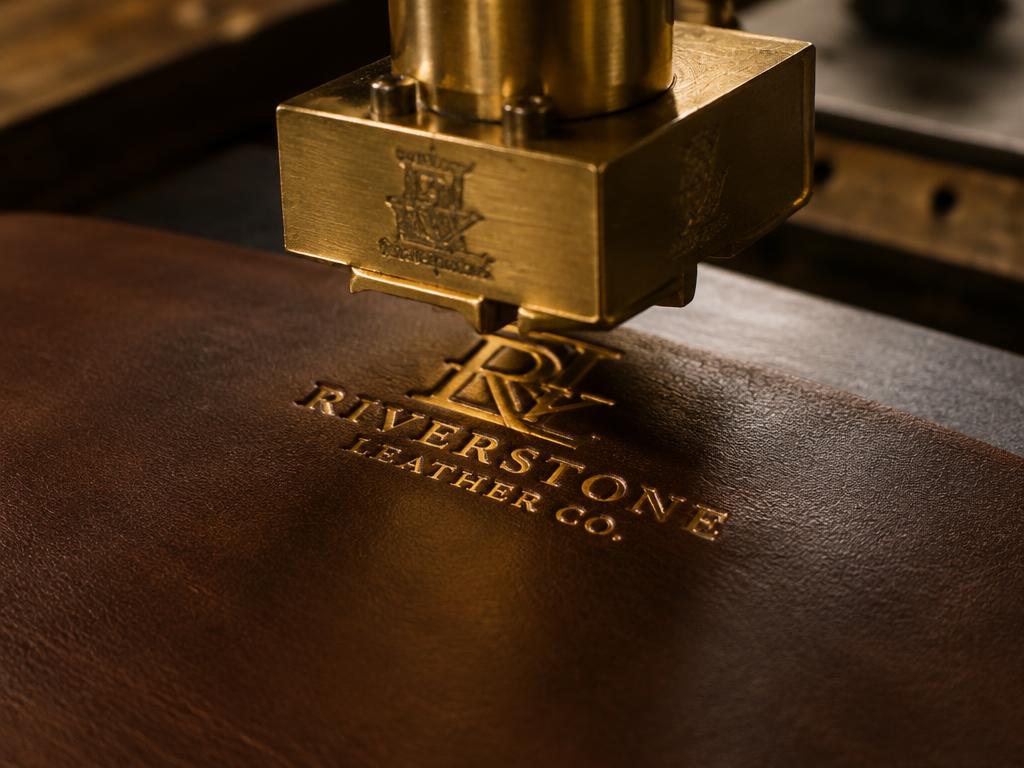
Blind deboss being pressed into vegetable-tanned leatherHeated brass die, no colour. The most durable mark and the most forgiving to repeat. 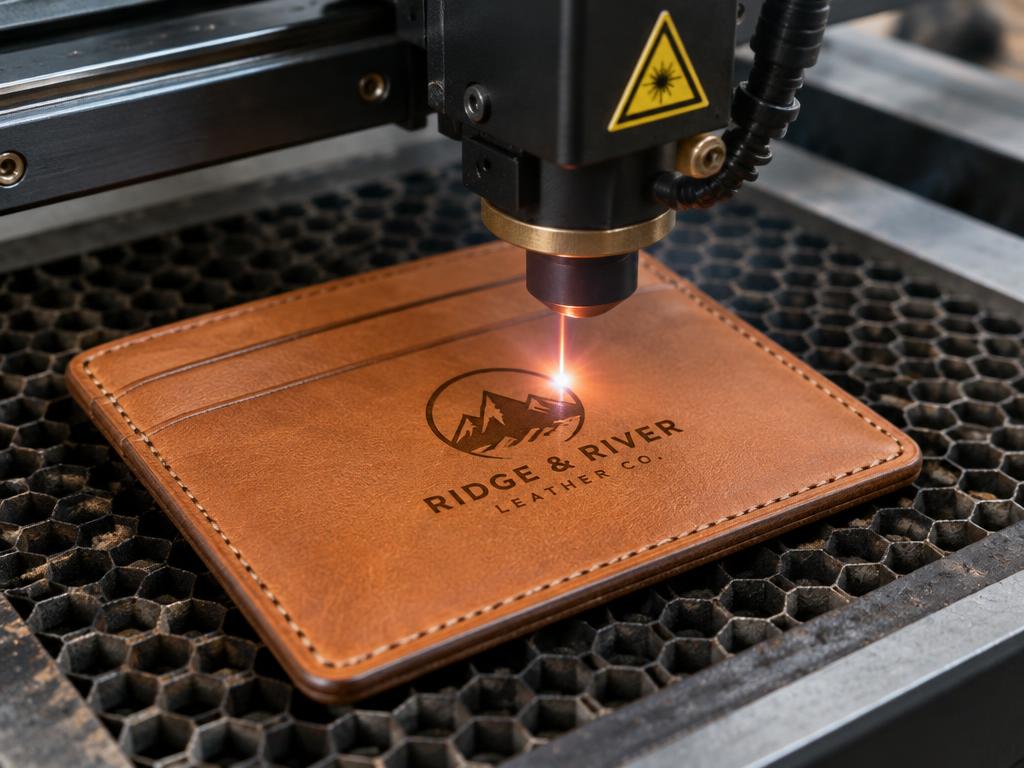
Laser engraving a monogram onto a leather card holderNo tooling, so it suits fine detail, variable data and per-piece personalisation. 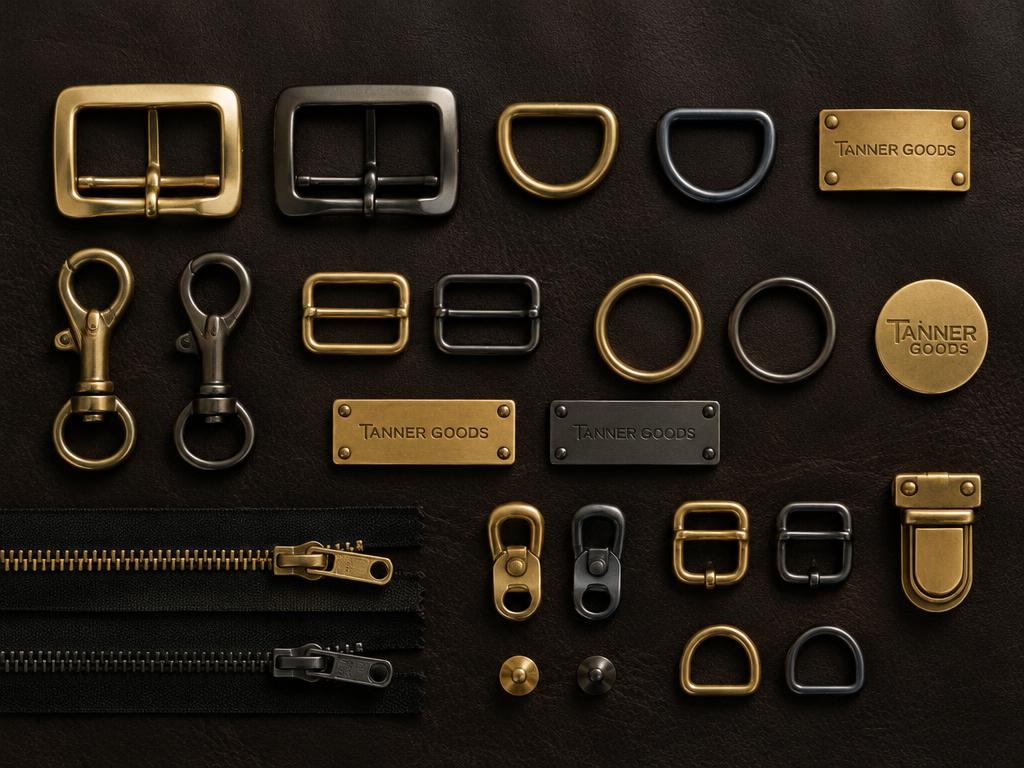
Branded zip pullers, buckles and D-rings for leather goodsLaser-mark stock hardware for low minimums, or cast your own with mould tooling. 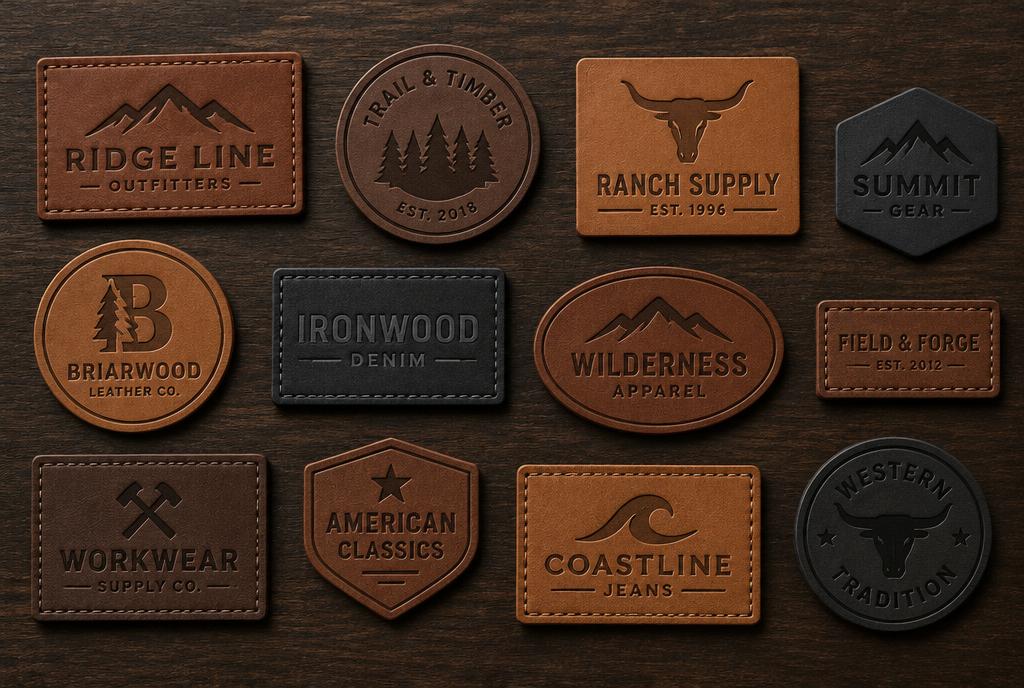
Debossed and laser-engraved leather patches for denim and headwearPatches and woven labels carry the label mill's minimum rather than ours.
- Blind deboss
- A heated brass die pressed into the leather, no colour added. Best on vegetable-tanned, full-grain and milled leather from about 1.2 mm up, where the grain holds a crisp impression. Subtle on soft, loose or heavily grained skins and on thin linings. The most durable method, because the mark is the leather itself. Needs vector artwork and a minimum line weight of roughly 0.5 mm at final size.
- Hot-foil stamping
- The same brass die carrying a foil film — gold, silver, copper, matt black, white and most metallic shades. Gives high contrast on dark leather, which a blind deboss cannot. The foil sits on the surface, so it abrades faster than a deboss; avoid it on belt loops, strap edges and anywhere a thumb rests. A deboss and a foil can share one die.
- Laser engraving
- No tooling at all, so artwork goes straight to the machine. That makes it the right choice for fine detail, small text, variable data and personalisation — initials, names, numbers, dates. Tone depends on the finish: crisp and controllable on vegetable-tanned leather and PU, uneven on heavily pigmented, oily or waxy leather, where it can burn pale or scorch. Always strike off first.
- Metal logo plate
- An etched or die-struck brass or zinc plate, riveted, screwed or glued and stitched into the panel. Carries the most perceived value of any method and is the usual choice for handbag hardware branding. Needs its own etch or mould tooling, so the first lead time is longer and there is a real minimum.
- Marked hardware
- Your logo on zip pullers, buckles, feet or turn locks. Laser-marking or etching stock hardware is the low-minimum route. Casting your own hardware from a custom mould gives a far better result but carries mould tooling, a higher minimum and a longer first lead time — worth it on a long-running range, rarely on a first order.
- Woven and printed labels
- Woven damask or satin labels, printed satin, and sew-on or heat-seal leather patches. These also carry the composition, care and origin wording many markets require, so they often earn their place twice. Minimums are set by the label mill, not by our MOQ.
- Screen and pad print
- Opaque ink, which is how you get a solid white or a bright colour onto dark leather or PU. Screen print suits larger flat areas; pad print reaches curved and recessed surfaces. Confirm flex and rub resistance on the strike-off — ink on soft or stretchy leather can crack at a fold.
- Printed lining and inside marks
- A printed lining or an inside stamp for brands that want the exterior unmarked. Useful for a secondary mark, a size or style code, or an anti-counterfeiting detail.
- Artwork requirements
- Vector — AI, EPS, PDF or SVG — with fonts outlined, single colour for deboss and foil, supplied at final size. Hairlines and small reversed-out text fill in on leather, so a monogram usually needs about 8–10 mm of width to stay legible and a wordmark more. We will tell you the smallest size your specific file survives.
- Tooling notes
- A brass die is engraved for one mark at one size and kept on record, so repeat orders and other styles carrying the mark at that size need no new tooling. A different size, or a logo change, means a new die. Die cost is one-time and quoted with the first order.
Every method is struck off on your actual leather and approved before production marking. Leather is a natural material: depth, tone and contrast vary between hides and between lots, so the strike-off sets the standard rather than a digital mock-up.
Material options and tannages are set out on our genuine leather, PU leather and vegan leather pages, and per-country transit times and incoterms on our export market pages.
Who it's for
Who chooses Custom Branding
Branding briefs look different depending on who is sending them. These are the ones we handle most often.
Brands consolidating a mark
Want one logo applied identically across wallets, bags and cases at different sizes. The answer is usually one die per size, recorded, rather than one die reused badly.
Denim, headwear and workwear labels
Arrive for patches: debossed or laser-engraved leather patches, sew-on or heat-seal, in volume. Patch MOQ is 500 pieces, and the artwork is usually too detailed at first.
Corporate gifting companies
One order, several different end-client logos, each on a small quantity. Laser engraving usually wins because there is no die per logo.
Hotels and hospitality groups
A crest with fine detail, blind debossed on a dark leather, repeated across menu covers, folders and key fobs as properties refurbish.
Watch and tech accessory brands
Want the mark on the hardware or the buckle rather than the leather, which turns the conversation into mould tooling versus laser-marked stock parts.
Event and promotional agencies
Need per-delegate personalisation — names or initials — inside a fixed deadline. Laser or changeable foil type, with a data file supplied per piece.
Brief checklist
- Logo as vector artwork — AI, EPS, PDF or SVG — with fonts outlined
- The products and quantity the mark will go on
- The leather or PU you are using, and its colour, so we can advise method
- Preferred placement and finished size of the mark, if you have one
- Foil colour, or a note that it should be a blind deboss
- Whether tags, dust bags, boxes or hardware also need branding
Branding enquiry
Send the logo and the leather, and we will tell you which method to use
Including the sizes it will not survive at — better to hear that now than on a strike-off card.
Product lines
Product lines most ordered through Custom Branding
MOQ across these lines runs 50–500 pieces per design. Every product page carries its own styles, materials and minimum.
Equipment & Custom
Custom Leather Patches
MOQ 500 pcs · debossed hat patch, jeans back patch
Small Leather Goods
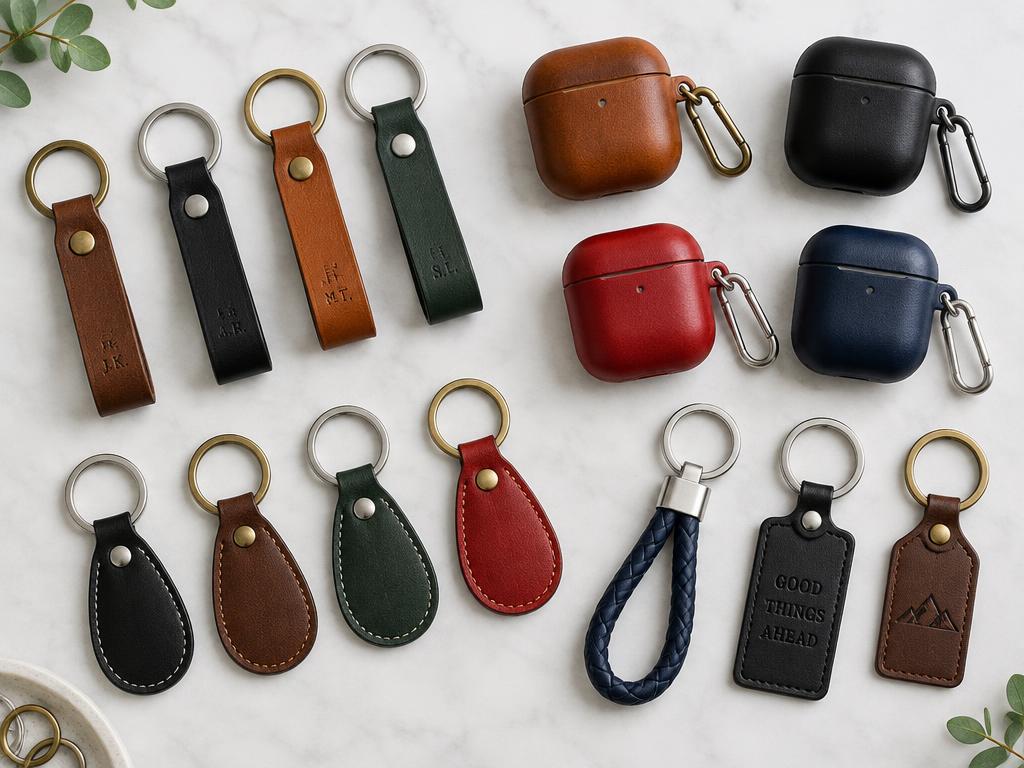
Leather Keychains
MOQ 500 pcs · loop key fob, key holder
Travel
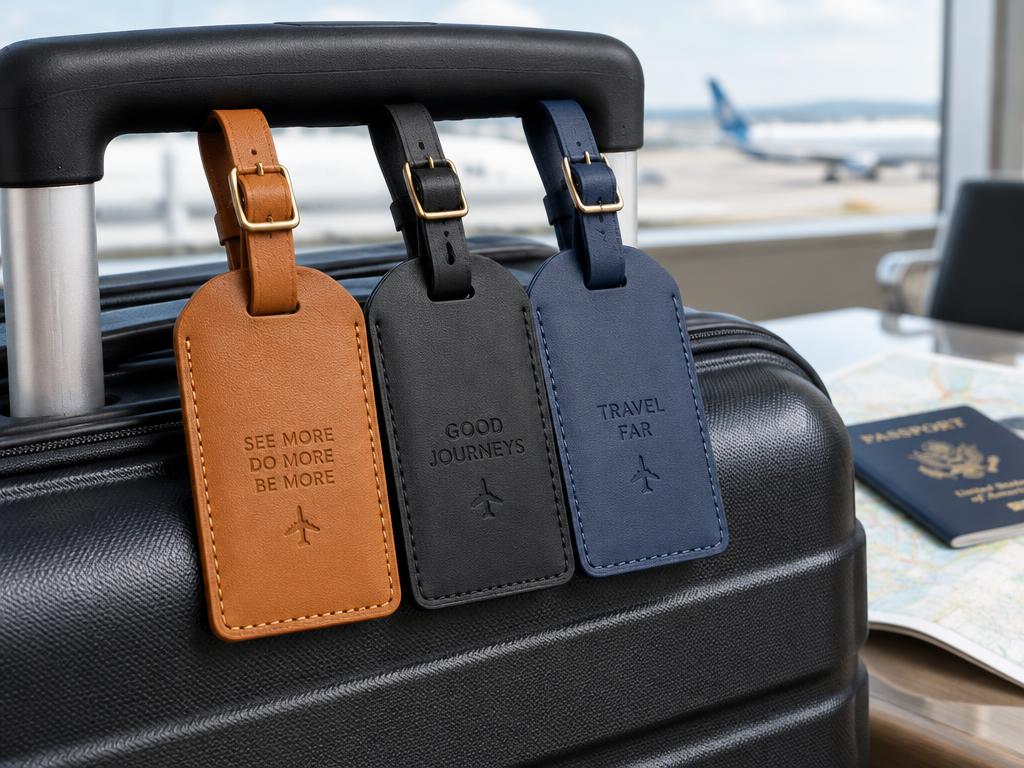
Leather Luggage Tags
MOQ 500 pcs · classic tag, privacy-flap tag
Corporate & Lifestyle
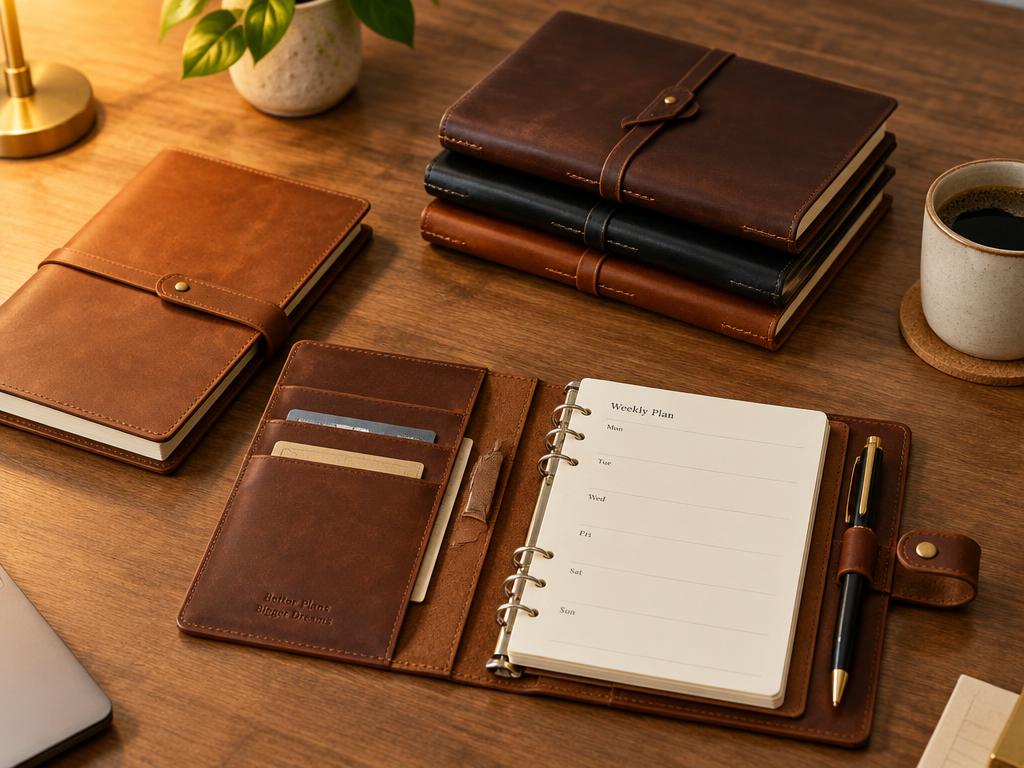
Leather Notebook Covers
MOQ 200 pcs · journal cover, refillable planner
Corporate & Lifestyle
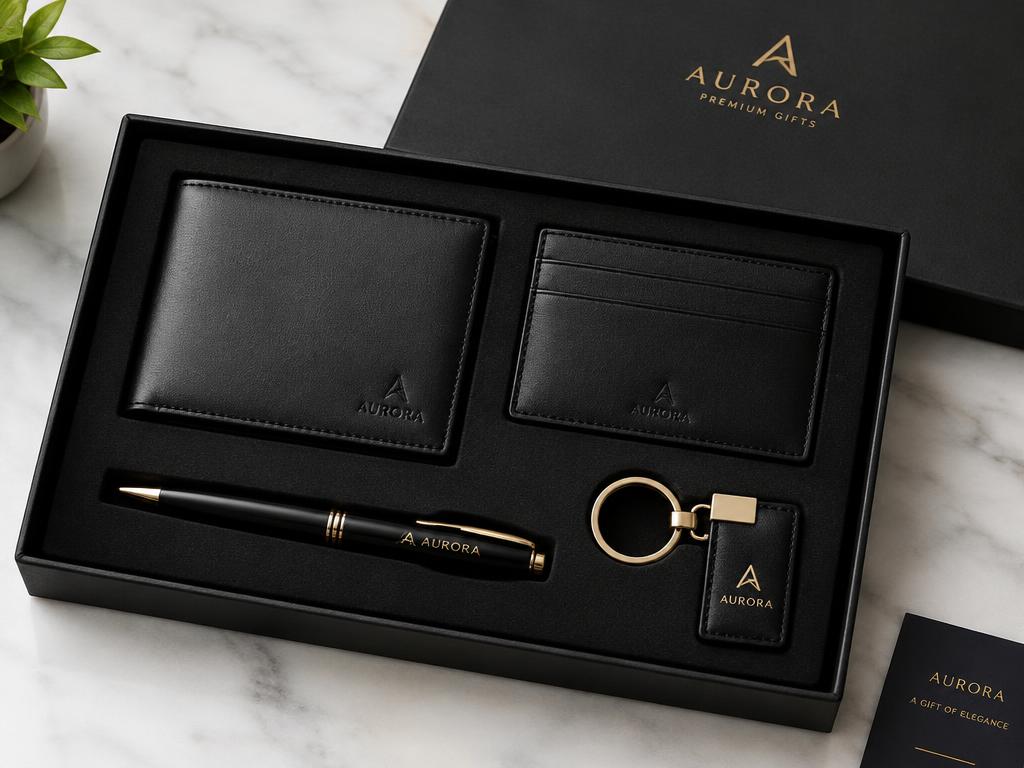
Leather Corporate Gift Sets
MOQ 100 pcs · wallet + card holder set, executive desk set
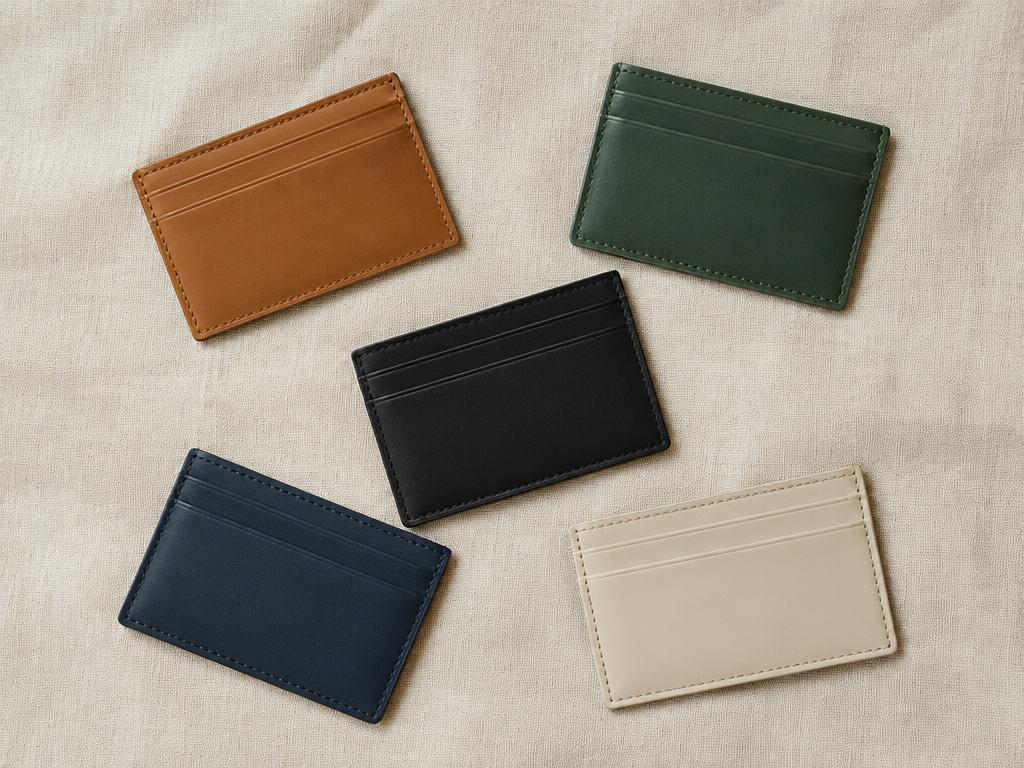
Small Leather Goods
Leather Card Holders
MOQ 300 pcs · slim card sleeve, magnetic money clip
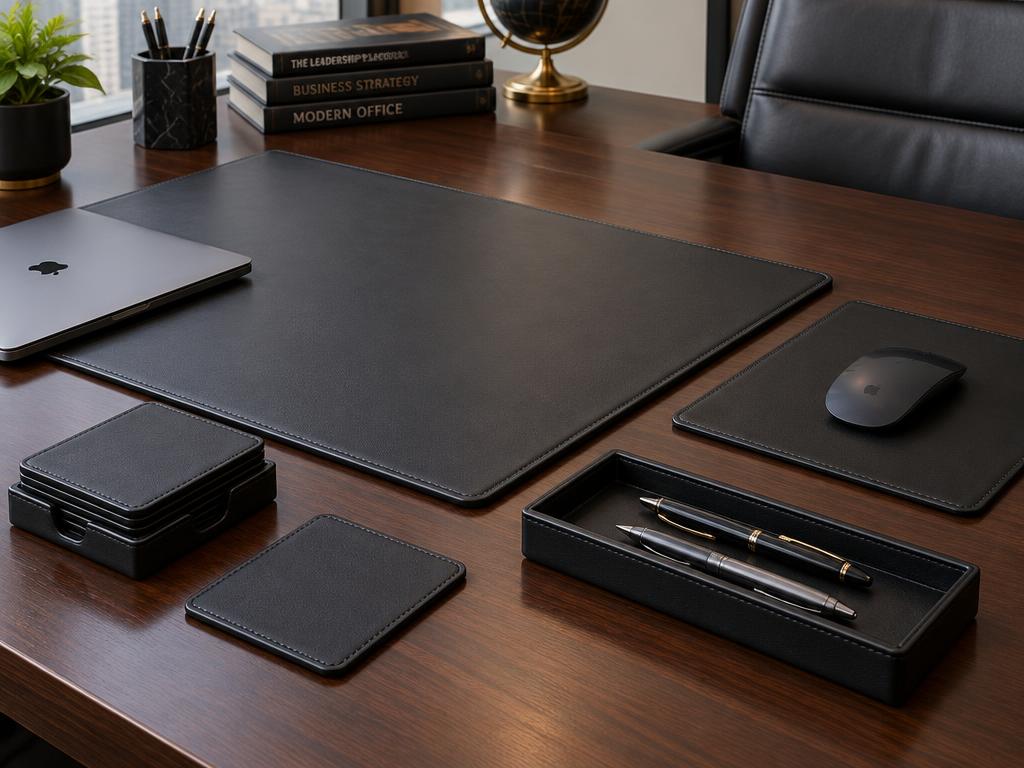
Corporate & Lifestyle
Leather Desk Accessories
MOQ 100 pcs · desk pad, mouse pad
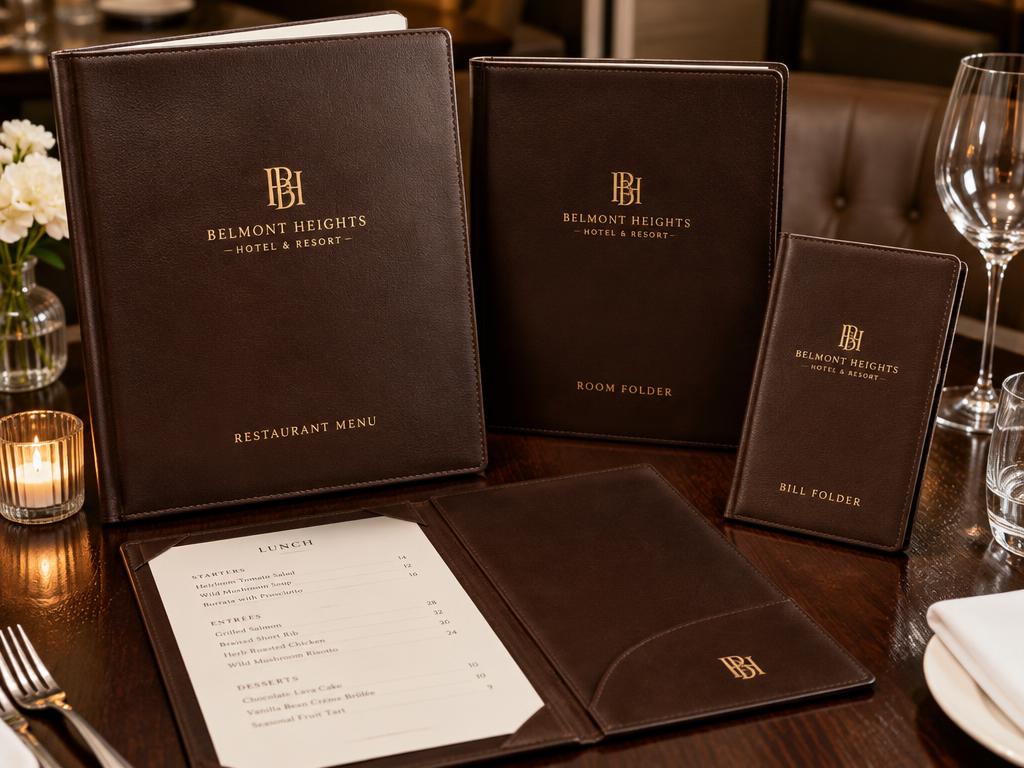
Corporate & Lifestyle
Leather Menu Covers & Folders
MOQ 50 pcs · restaurant menu cover, hotel room folder
Browse all 41 product lines — or tell us what is not on the list.
Custom Branding: questions buyers ask
What file do you need for a logo?+
Vector: AI, EPS, PDF or SVG, with fonts outlined, in a single colour for deboss or foil, and supplied at the final size you want it struck. A PNG or JPEG can only be traced, and tracing loses exactly the fine detail that leather is already fighting. If vector genuinely does not exist, send the best file you have and we will quote the redraw separately.
Deboss or hot foil — which lasts longer?+
A blind deboss, by a clear margin, because the mark is a permanent compression of the leather rather than a layer on top of it. Foil is a film and will abrade where the product is handled or rubs — belt loops, strap edges, the thumb position on a wallet. Use foil where you need contrast on dark leather, and keep it away from high-wear surfaces.
Do I pay for the die on every order?+
No. The brass die is one-time tooling for a given mark at a given size, quoted with the first order and then kept on record with its settings. Repeat orders and new products carrying the mark at the same size use the same die. A size change or a logo redesign needs a new die.
Can you personalise individual pieces inside a bulk order?+
Yes, usually by laser engraving or by hot foil with changeable type. We need a clean per-piece data file and a clear mapping to cartons or polybags, and it adds handling time rather than production time. There is a practical ceiling per run before the handling cost outweighs the effect, so tell us the quantity and the deadline and we will quote the job honestly.
Will the mark look identical on every piece?+
Close, not identical, and that is the nature of the material. No two hides take heat, pressure or laser energy in exactly the same way, and vegetable-tanned and pull-up leathers vary most. We lock the settings against your approved strike-off and check position in-line; what varies is tone and depth within the range the strike-off showed you.
Can you match a Pantone on leather?+
On printed packaging, swing tags and labels, yes — printers work to Pantone on paper and board. On leather, no honest supplier should promise it: ink and foil shift against a natural, absorbent, coloured substrate. We get as close as the strike-off demonstrates and ask you to approve that physical sample as the standard.
Can you brand goods we had made somewhere else?+
On request, but think about it commercially first. We would want to strike off on the actual material before committing, and freighting finished goods to India and back usually costs more than it saves. If the aim is better branding, it is normally cheaper to move the production order and get the mark applied in-line on unassembled panels.
Is there a minimum quantity just for branding?+
Branding follows the MOQ of the product it goes on — from 100 pieces per design on most bags and larger items. Where the branding is the product, the item's own minimum applies: leather patches start at 500 pieces, and woven labels carry the label mill's minimum. Custom-cast hardware has the highest minimum of anything on this page.