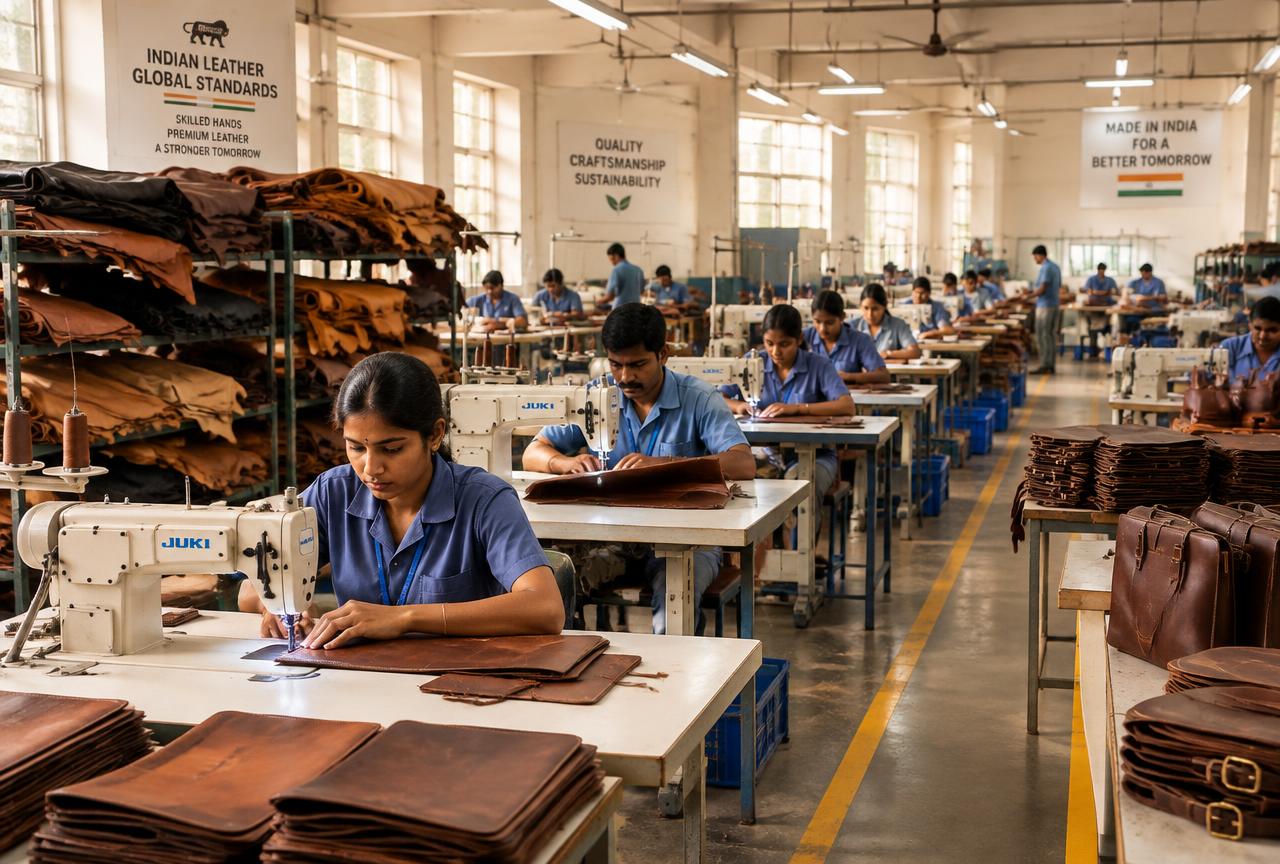
Service
OEM Manufacturing for leather goods
Build-to-print manufacturing for brands that already own their designs. You send the tech pack, drawings or a counter-sample; we engineer the pattern, source to your bill of materials and produce against your quality standard.
- Pre-production sample: 7–12 days
- Bulk lead time: 30–45 days
- MOQ: From 100 pcs per design
- Inspection: AQL 2.5, 1.5 on request
- Capacity
- 60,000+ pieces / month
- MOQ
- From 100 pieces per design
- Sampling
- Samples in 7–12 days
- Production
- Bulk in 30–45 days
- Reach
- Exporting to 55+ countries
- Team
- 180+ skilled artisans
What's included
What OEM Manufacturing covers, and what it does not
OEM means the design stays yours and the factory works to it. Nothing gets reinterpreted: measurements, construction notes, materials and the defect standard come from you, and the sealed sample we both sign is what final inspection is judged against.
- Pre-production sample
- 7–12 days
- Bulk lead time
- 30–45 days
- MOQ
- From 100 pcs per design
- Inspection
- AQL 2.5, 1.5 on request
What we do
Inside the quoted price
- Read the tech pack and come back with buildability and costing notes before anything is cut
- Make and grade hard patterns from your drawings, measurements or a physical counter-sample
- Source to your nominated bill of materials, or submit an equivalent with swatches for approval
- Produce a pre-production sample and a sealed counter-sample for sign-off before bulk cutting
- Follow your construction notes: skiving, turned or raw edge, edge paint, bar tacks, stitch pitch
- Apply your care, composition, country-of-origin and barcode labelling in-line
- Inspect against your defect classification and AQL, with a photo report before dispatch
- Keep your patterns, cutting dies and logo dies on record so repeat orders skip tooling
What you provide
To start the job
- Tech pack, drawings or a counter-sample, with the tolerances that actually matter marked
- Bill of materials: leather article and thickness, lining, thread, hardware and plating
- Logo artwork as vector, with the placement and the size you want it struck at
- Your AQL and defect classification, or a note that our default applies
- Colour and size split for the order, the destination port or city, and the incoterm
What you receive
Deliverables
- A costed quotation against your bill of materials, with any substitution flagged openly
- A pattern pack and measurement sheet to check before we sample
- A pre-production sample, then two sealed samples — one with you, one retained at the factory
- In-line and final inspection reports with photographs
- Production to the sealed sample, packed and labelled to your carton spec
- The export document set: commercial invoice, packing list, bill of lading or air waybill, certificate of origin
Compare
OEM Manufacturing against our other four services
All five run through the same factory, the same artisans and the same inspection. What changes is who owns the design, how much set-up it needs and how fast you can be in market.
- This service
OEM Manufacturing
- Whose design
- Yours, to your tech pack
- Tech pack needed
- Yes, or a counter-sample
- Typical MOQ
- From 100 pcs per design
- First sample
- 7–12 days (pre-production sample)
- Branding depth
- Exactly as specified, incl. nominated hardware
- Lead time
- 30–45 days after the sealed sample
- Best for
- Brands with their own designs, materials and QC standard
Private Label
- Whose design
- Ours, already proven in production
- Tech pack needed
- Not needed
- Typical MOQ
- From 100 pcs per design, colours mixable
- First sample
- 7–12 days, branded
- Branding depth
- Logo, colour, lining, hardware, packaging
- Lead time
- 30–45 days after sample approval
- Best for
- Launching or extending a range without design work
Custom Branding
- Whose design
- Either — applied to any order
- Tech pack needed
- Logo artwork only
- Typical MOQ
- Follows the product MOQ
- First sample
- Strike-off alongside the sample
- Branding depth
- Every method we offer, on any surface
- Lead time
- Inside the production window
- Best for
- Putting a consistent mark across a whole range
Sampling & Prototyping
- Whose design
- Yours, developed with us
- Tech pack needed
- A sketch or a sample is enough
- Typical MOQ
- One sample
- First sample
- 7–12 days, plus a revision round
- Branding depth
- Proofed on the sample as a strike-off
- Lead time
- 7–12 days per round
- Best for
- Proving a new product before committing to a run
Bulk & Wholesale
- Whose design
- Already approved and sealed
- Tech pack needed
- Sealed sample is the spec
- Typical MOQ
- From 100 pcs, colours mixable
- First sample
- Not applicable — the sealed sample stands
- Branding depth
- Repeat of approved branding and tooling
- Lead time
- 30–45 days from material booking
- Best for
- Repeat volume, seasonal buys and tenders
| This serviceOEM Manufacturing | Private Label | Custom Branding | Sampling & Prototyping | Bulk & Wholesale | |
|---|---|---|---|---|---|
| Whose design | Yours, to your tech pack | Ours, already proven in production | Either — applied to any order | Yours, developed with us | Already approved and sealed |
| Tech pack needed | Yes, or a counter-sample | Not needed | Logo artwork only | A sketch or a sample is enough | Sealed sample is the spec |
| Typical MOQ | From 100 pcs per design | From 100 pcs per design, colours mixable | Follows the product MOQ | One sample | From 100 pcs, colours mixable |
| First sample | 7–12 days (pre-production sample) | 7–12 days, branded | Strike-off alongside the sample | 7–12 days, plus a revision round | Not applicable — the sealed sample stands |
| Branding depth | Exactly as specified, incl. nominated hardware | Logo, colour, lining, hardware, packaging | Every method we offer, on any surface | Proofed on the sample as a strike-off | Repeat of approved branding and tooling |
| Lead time | 30–45 days after the sealed sample | 30–45 days after sample approval | Inside the production window | 7–12 days per round | 30–45 days from material booking |
| Best for | Brands with their own designs, materials and QC standard | Launching or extending a range without design work | Putting a consistent mark across a whole range | Proving a new product before committing to a run | Repeat volume, seasonal buys and tenders |
Choose OEM when the drawing already exists and what you need from a factory is fidelity: the pattern cut the way you drew it, the hardware you nominated, the standard you inspect to. It carries more set-up work than private label, because every decision is yours to make and to sign off.
Timeline
OEM Manufacturing, stage by stage
An OEM programme spends most of its calendar before the line starts. Durations outside the figures we publish are typical, not promises.
- 1
Tech pack review and costing
Typically 2–4 working daysWe read the pack, query anything ambiguous, flag constructions that will not hold at your target price, and quote against your bill of materials.
- 2
Pattern-making and material approval
Typically about a weekHard patterns cut and graded from your spec. Leather swatches, lining, thread shades and hardware plating samples go out for approval, with any substitution clearly marked.
- 3
Pre-production sample
7–12 daysA full sample in the approved materials with branding struck at the specified size, couriered with a measurement sheet read against your tolerances.
- 4
Sealed sample sign-off
Depends on your reviewYour comments addressed point by point, then two samples sealed and signed. One stays with you, one is retained at the factory as the inspection benchmark.
- 5
Bulk production with in-line QC
30–45 daysClicker-press cutting against the yield plan, then splitting, skiving, stitching, edge finishing and hardware fitting, checked at each stage rather than only at the end.
- 6
Final inspection, packing and export
Before dispatchRandom sampling at your AQL with a photo report, then labelling, polybagging, carton marking and the full document set to your forwarder.
Every order also passes through the same six production stages on the floor — see the full factory process or how quality is checked.
Capabilities
What we can hold to a specification
The useful question for an OEM buyer is not whether a factory can make bags, but which constructions it can hold consistently across thousands of pieces. This is the honest answer for our floor.
- Clicker press cutting
- Hand clicking around hide defects
- Splitting and skiving to thickness
- Turned edge
- Raw edge with edge paint
- Bound and piped seams
- Bar tacking at stress points
- Foam-fitted interiors
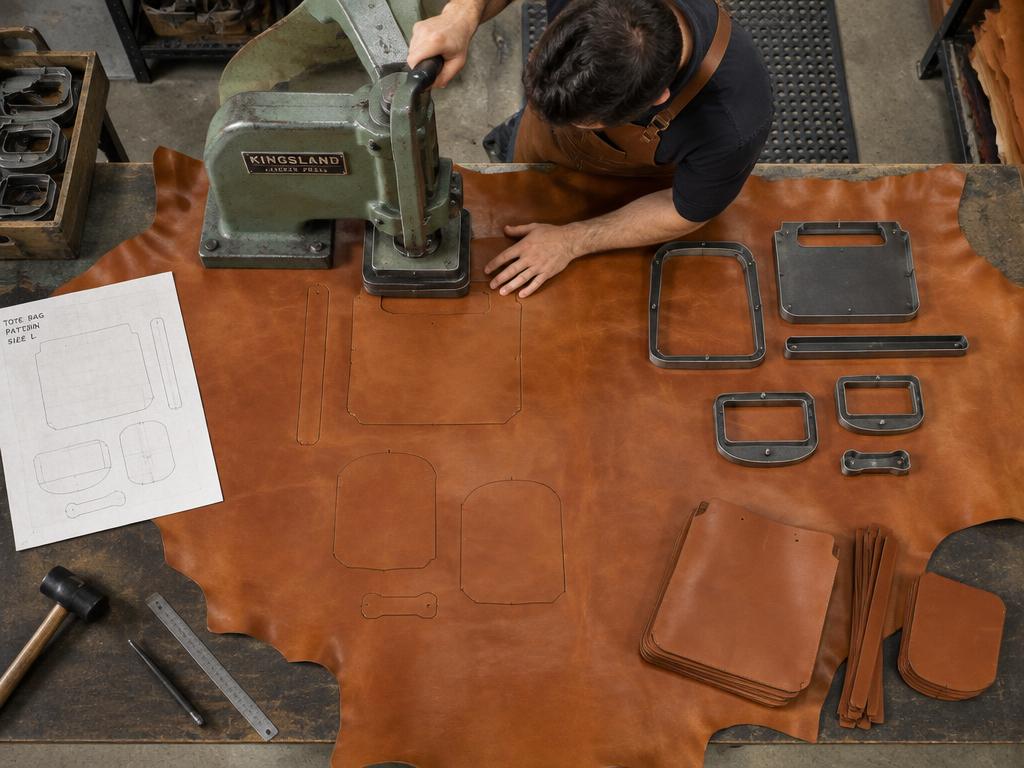
Clicker press cutting leather panels with steel-rule diesDies are one-time tooling, numbered and kept on record, so a repeat order starts at cutting. 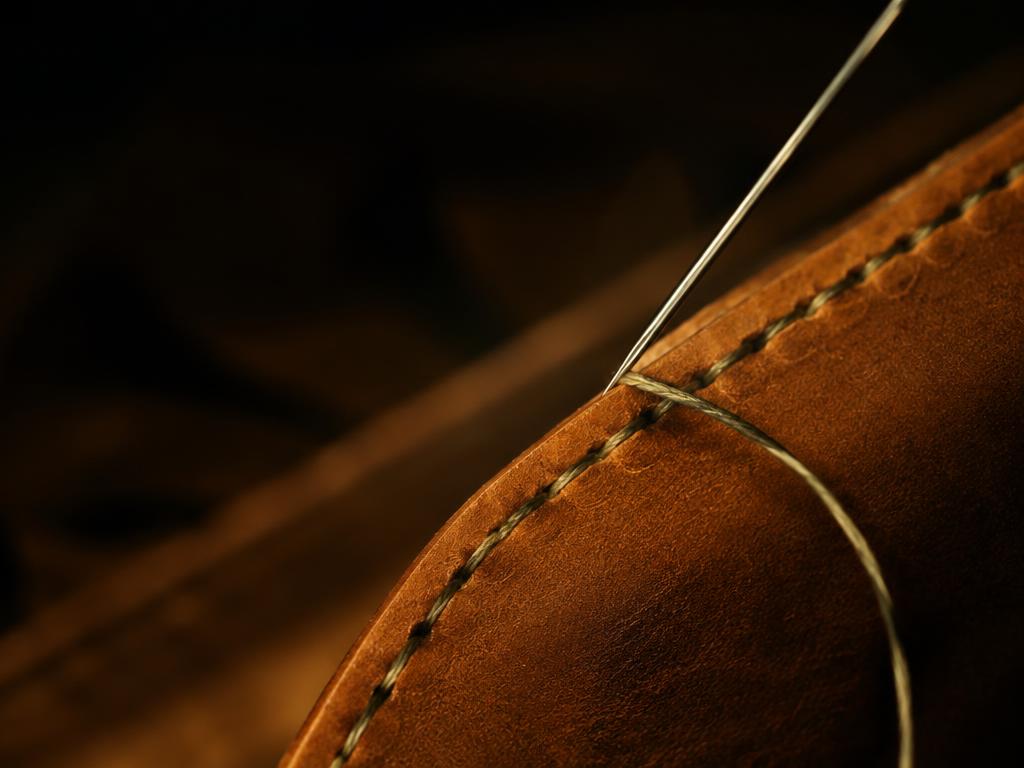
Stitching a leather panel to a specified stitch pitchFlatbed, post-bed and cylinder-arm machines cover flat panels, gussets and tubular assemblies. 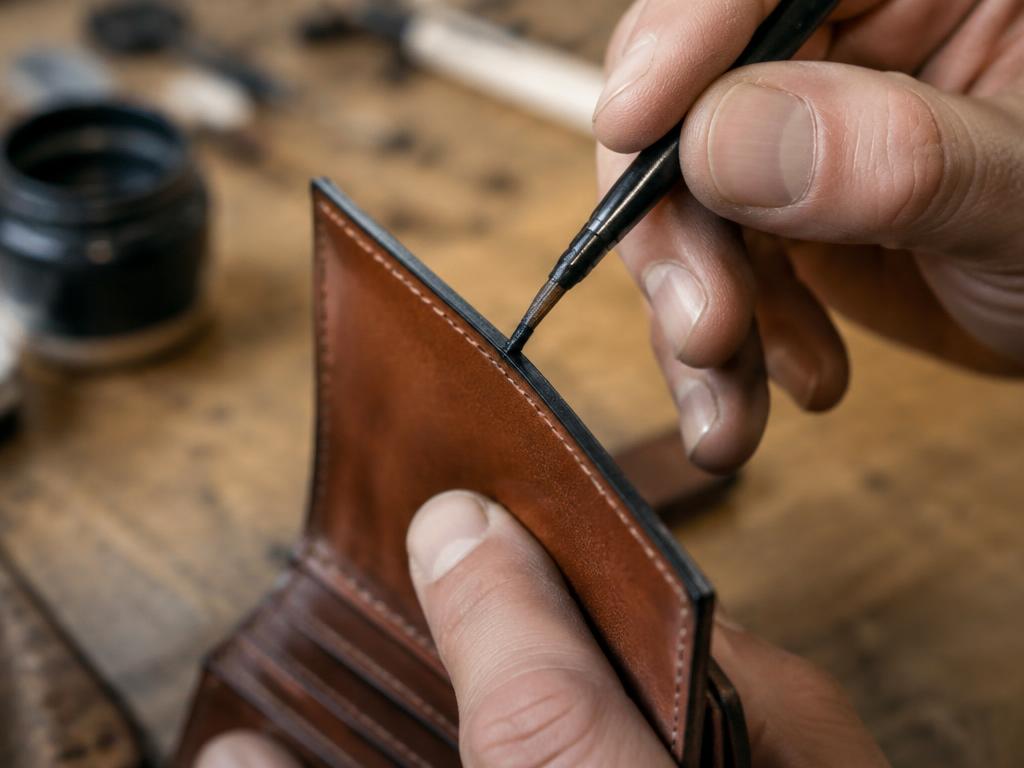
Edge paint being applied to the edge of a leather beltRaw edge with multiple paint coats and burnishing, or a turned edge where the spec calls for it. 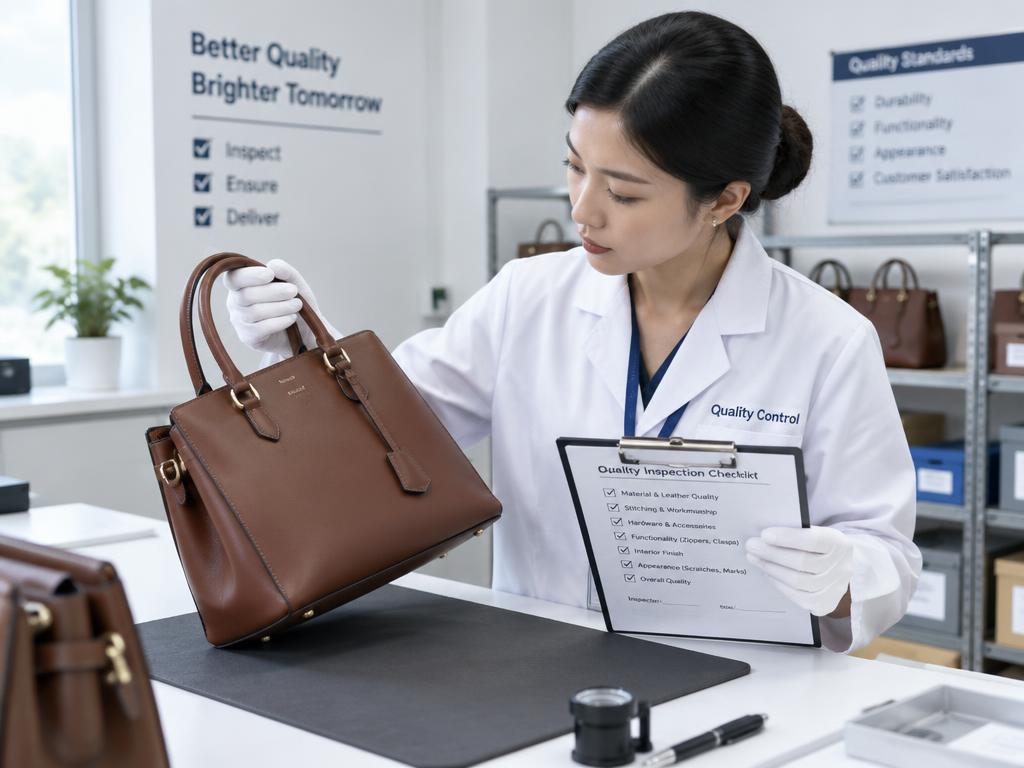
Inspector measuring a finished leather bag against a spec sheetMeasured against your tolerances and the sealed sample, not against a general impression.
- Pattern-making
- Hard patterns graded from your tech pack, drawing or counter-sample. You get a measurement sheet to check before we sample, which is where spec disagreements are cheapest to fix.
- Leather thickness
- Specified in mm, or oz if you prefer (1 oz is roughly 0.4 mm). Splitting and skiving to hit it: about 0.6–1.0 mm for linings and wallet interiors, 1.2–1.6 mm for small leather goods, 1.6–2.4 mm for bag bodies, straps and belts.
- Tannage and finish
- Chrome, chrome-free and vegetable-tanned cow and buffalo, plus goat and sheep skins, in nubuck, suede, milled, pull-up and pigmented finishes. Aniline and vegetable-tanned articles vary between hides by nature; pigmented leather and PU are the consistent choices for a strict colour spec.
- Construction
- Turned edge, raw edge with edge paint, bound edge, piped seams, bar tacks at stress points and reinforcement tape behind straps. Stitch pitch to your spec, commonly 5–7 stitches per inch on bags.
- Hardware
- Zips, D-rings, buckles, feet, turn locks and magnetic snaps in your nominated brand where it can be shipped to India, otherwise an equivalent submitted as a physical sample. Platings include antique brass, light gold, nickel, gunmetal and matt black — state any salt-spray expectation in the pack if it matters to you.
- Lining
- Cotton twill and canvas, microfibre suede, polyester, pigskin or self-leather, with pocket layouts to your drawing and printed linings from your artwork.
- Fitted and padded cases
- Foam-fitted interiors for devices, instruments and tools. Send the device or a dimensioned drawing; the interior cavity tolerance is agreed in writing, and tight cavities usually need a mock-up before any leather is cut.
- Quality standard
- Your AQL and defect classification, or our default of AQL 2.5 on major and minor defects, 1.5 on request. In-line checks at cutting, stitching and finishing, plus a final random inspection with photographs. Your own or a third-party inspector is welcome on site.
- Labelling and documents
- Care, composition, country-of-origin and barcode labelling applied in-line. HS heading 4202 covers leather travel goods, handbags and wallets; 4203 covers apparel and gloves — confirm the final classification and any preference claim with your own broker.
Capacity across all lines is 60,000+ pieces a month with 180+ artisans. What a given construction can hold depends on the article of leather and the hardware, so have the pre-production sample measured before you commit to a delivery date.
Material options and tannages are set out on our genuine leather, PU leather and vegan leather pages, and per-country transit times and incoterms on our export market pages.
Who it's for
Who chooses OEM Manufacturing
OEM buyers arrive with a specification rather than a question. These are the briefs we see most, and what they usually contain.
Established fashion labels
Arrive with a tech pack, a counter-sample from a previous supplier and a target FOB. The decision turns on pattern fidelity and whether their AQL is applied as written.
Electronics OEMs
Send a device or a dimensioned drawing and ask for a padded PU holster or fitted case to a stated tolerance, with case volumes tied to device production runs.
Instrument and optics makers
Need foam-fitted interiors to a fixed internal layout, usually a mock-up stage before leather, and identical repeats years apart.
Tool, workwear and outdoor brands
Hand over an existing pouch, roll or apron to be re-engineered: rivet and bar-tack placement, heavier leather, reinforcement where it fails in the field.
Medical device companies
Specify wipe-clean PU, a fixed internal layout and documented material declarations, with repeats scheduled against device shipments.
Watch brands and microbrands
Spec lug width, taper, thickness, lining and quick-release hardware, and expect the strap to match a sealed sample batch after batch.
Brief checklist
- Tech pack, drawings or a counter-sample we can measure
- Target quantity for the first order, split by colour and size
- Leather article and thickness, or the price point to design back from
- Branding artwork as vector, with fonts outlined
- Hardware brand or finish references, and anything you intend to nominate
- Target delivery date, destination port or city, and the incoterm you work on
OEM enquiry
Send the tech pack and we will come back with buildability notes
We would rather tell you what will not hold at your target price before you spend money on a sample than after.
Product lines
Product lines most ordered through OEM Manufacturing
MOQ across these lines runs 100–300 pieces per design. Every product page carries its own styles, materials and minimum.
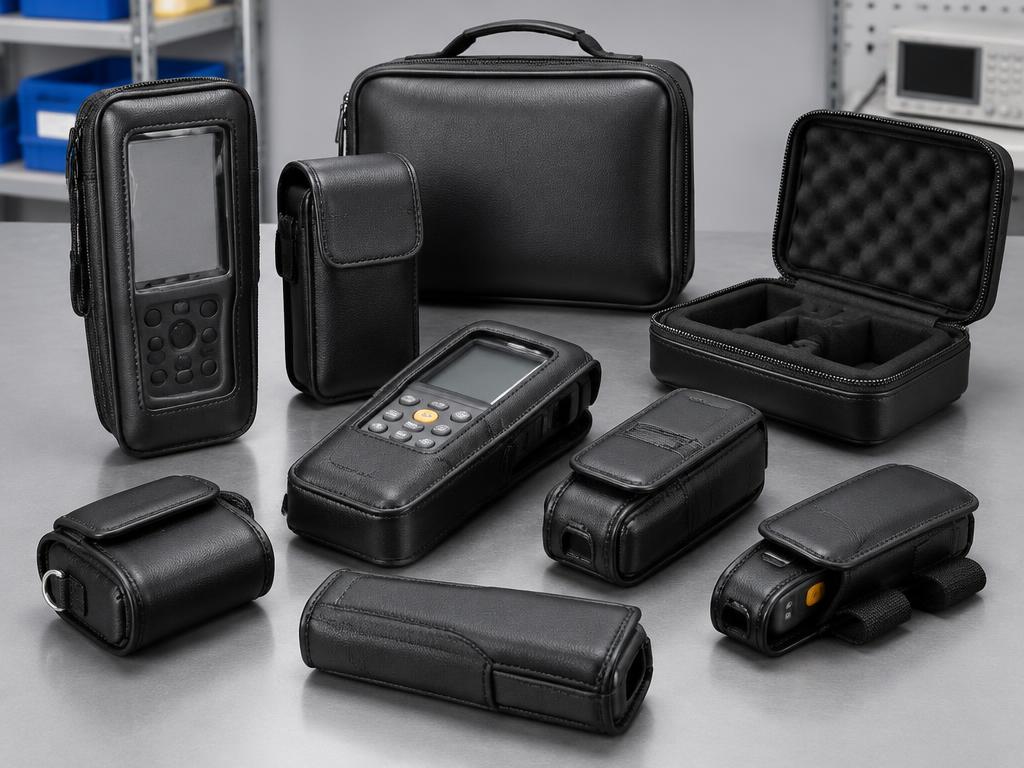
Equipment & Custom
PU Leather Equipment Covers
MOQ 200 pcs · handheld device holster, padded meter case
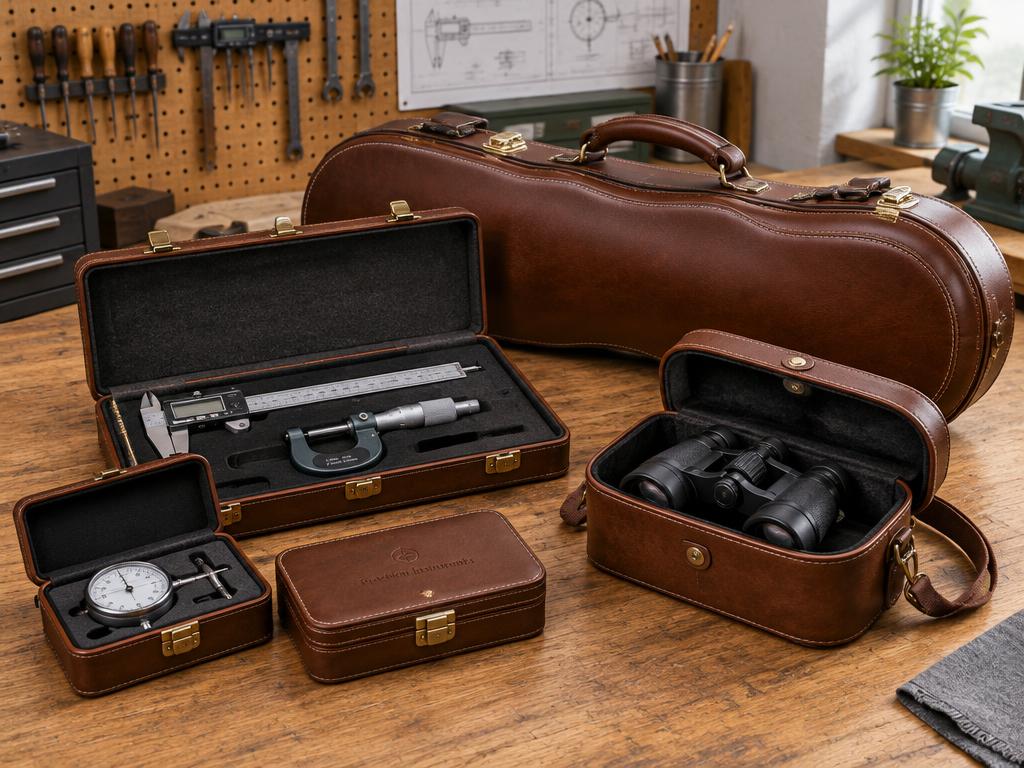
Equipment & Custom
Leather Instrument Cases
MOQ 100 pcs · measuring instrument box, binocular case
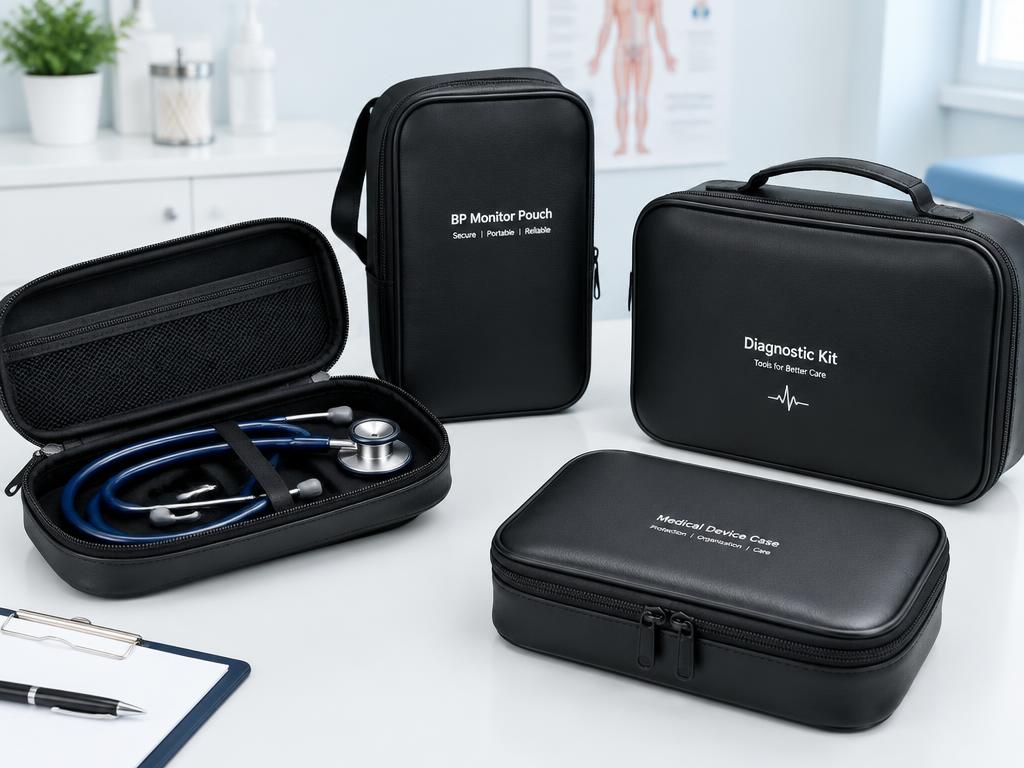
Equipment & Custom
PU Leather Medical Device Cases
MOQ 200 pcs · stethoscope case, BP monitor pouch
Equipment & Custom
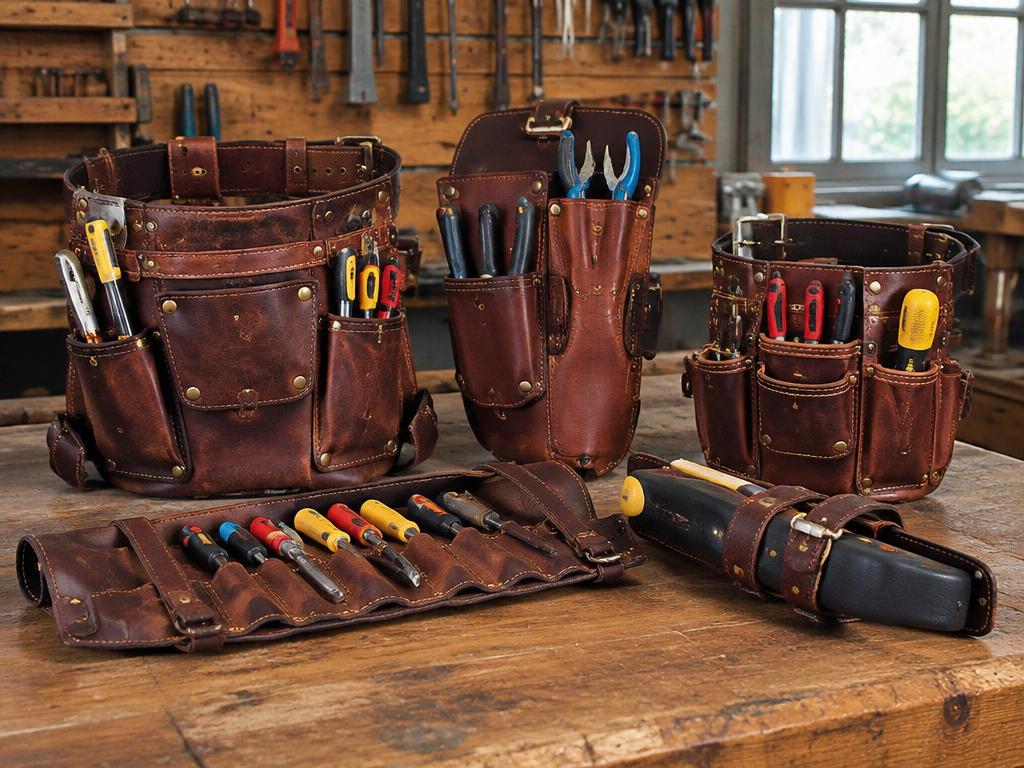
Leather Tool Pouches & Holsters
MOQ 100 pcs · tool belt, tool roll
Cases & Covers
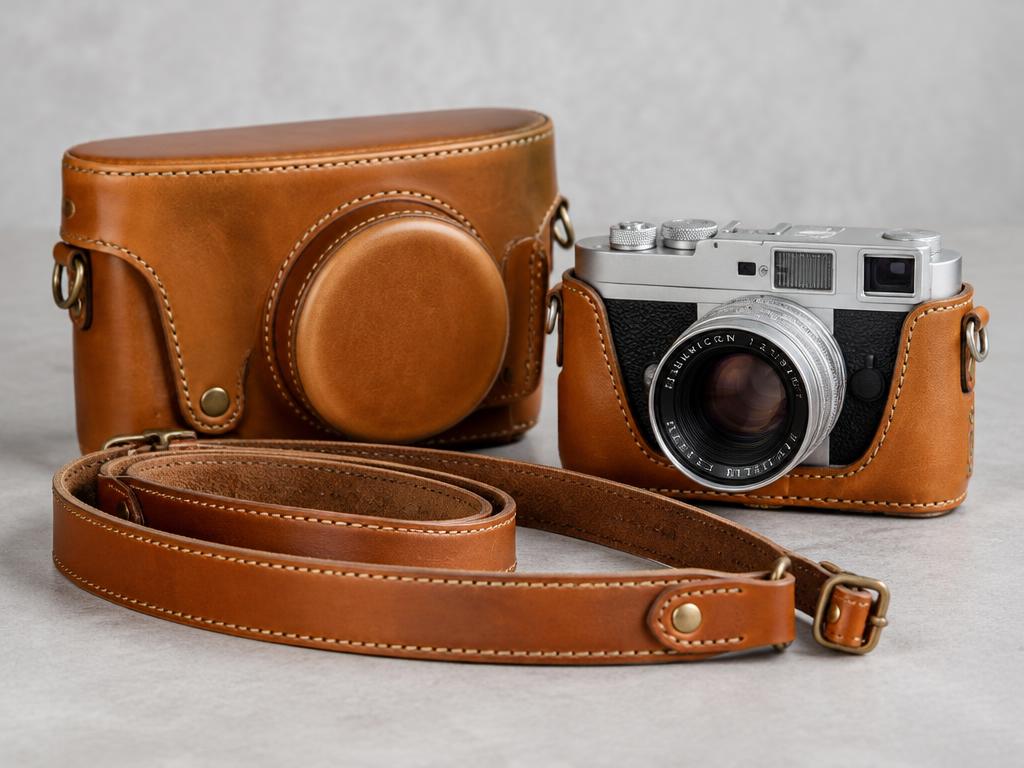
Leather Camera Cases
MOQ 150 pcs · half case, full ever-ready case
Small Leather Goods
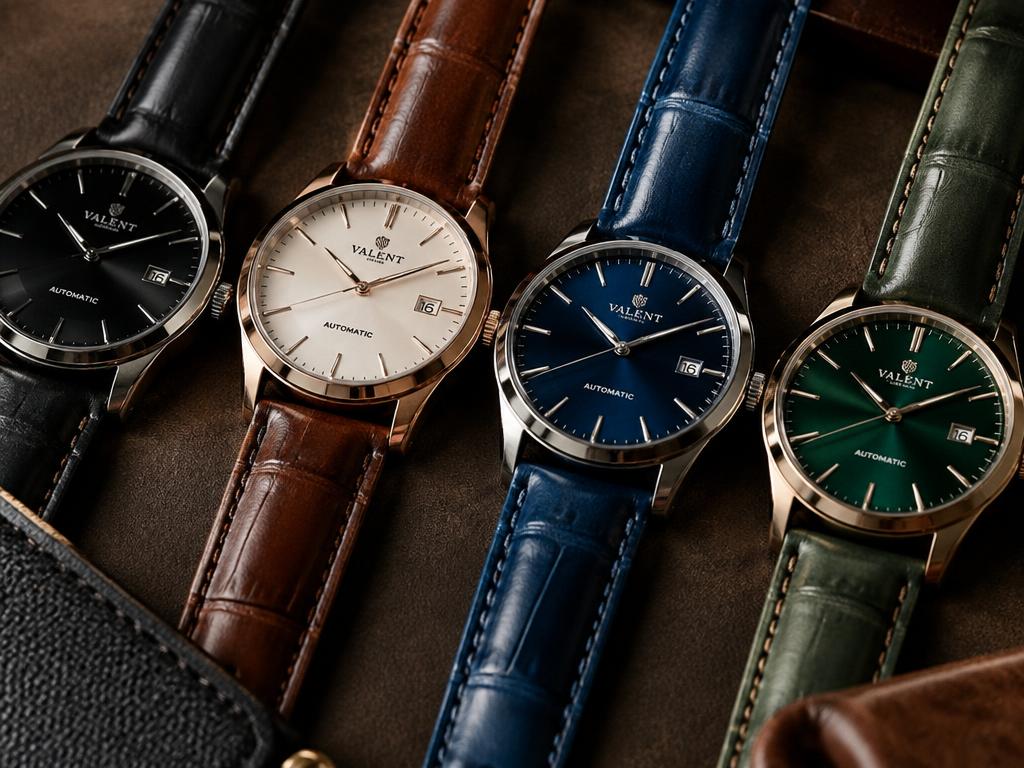
Leather Watch Straps
MOQ 300 pcs · quick-release strap, croc-embossed strap
Bags
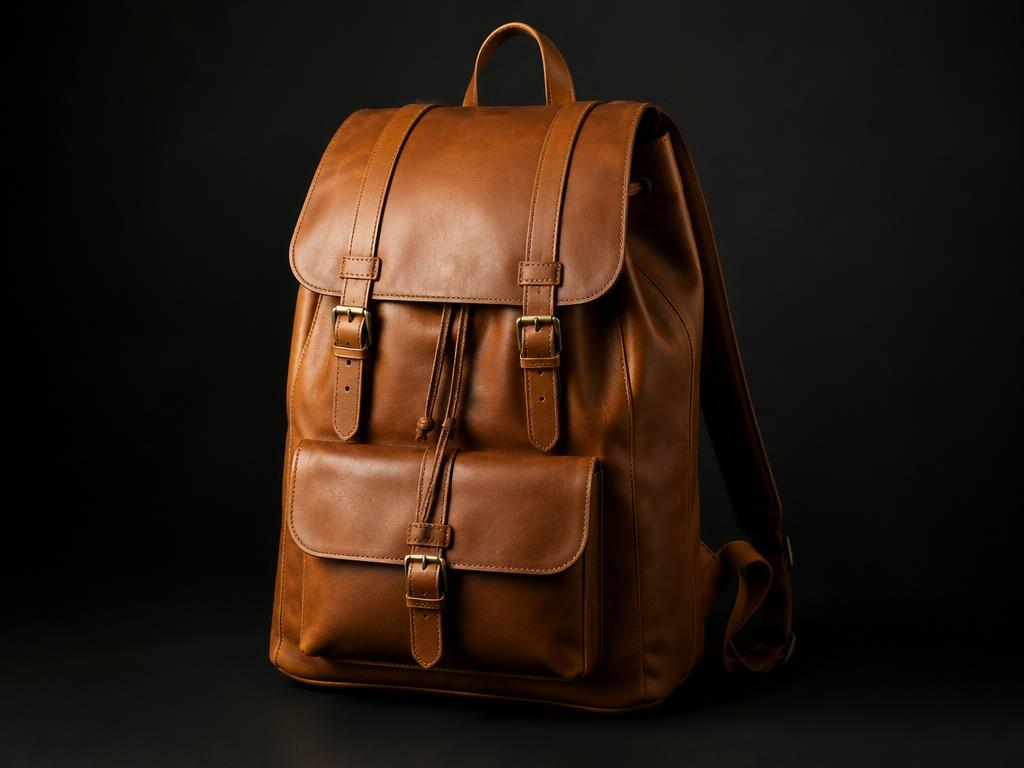
Leather Backpacks
MOQ 100 pcs · rucksack with flap, laptop backpack
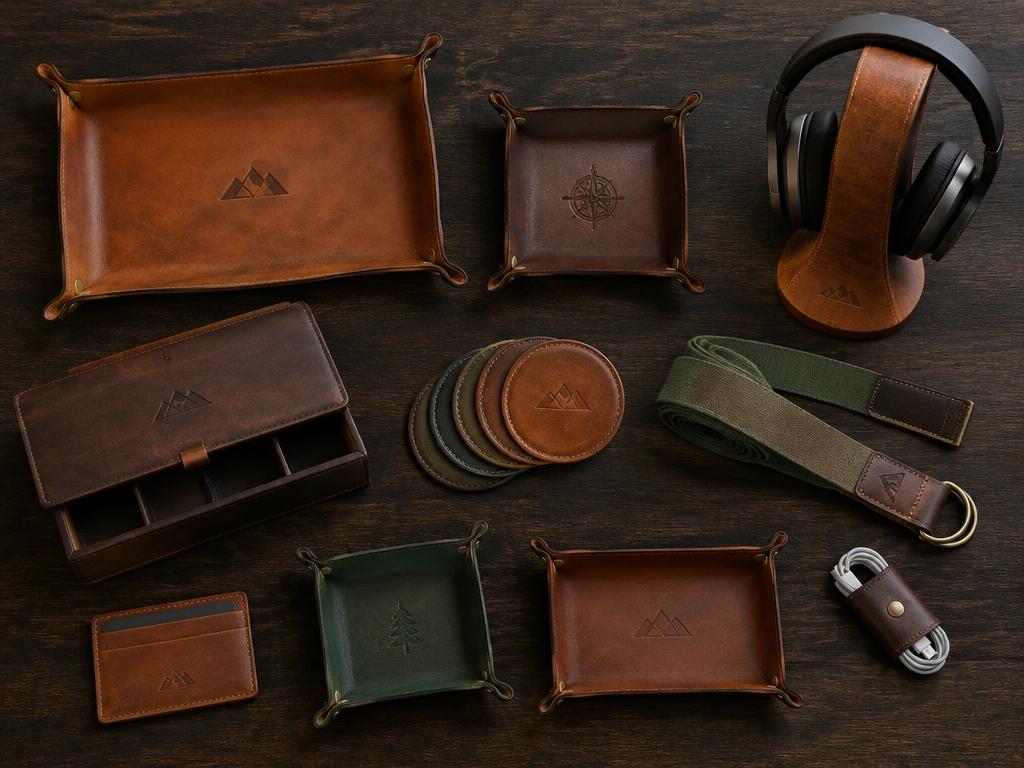
Equipment & Custom
Custom Leather Products
MOQ 100 pcs · valet trays, storage boxes
Browse all 41 product lines — or tell us what is not on the list.
OEM Manufacturing: questions buyers ask
Who owns the designs and patterns in an OEM order?+
You do. Designs, drawings and tech packs you send stay yours. Patterns we cut from your specification are made for your programme, kept on record for your repeats, and not offered to other buyers. Our own base styles are a separate thing and remain ours — those are what private label draws on.
Can you work from a physical sample instead of a tech pack?+
Yes, and it is often faster. Send a counter-sample; we measure it, reverse-engineer the pattern and return a measurement sheet and bill of materials for approval before sampling. Expect the first sample round to take longer than it would from a complete pack.
Will you use our nominated leather and hardware suppliers?+
Where the supplier can ship to India on sensible commercial terms, yes — nominated materials are normal on OEM work. Where they cannot, we submit an equivalent with physical swatches and plating samples and wait for your written approval rather than substituting quietly.
What inspection do we get, and can we send our own inspector?+
In-line checks at cutting, stitching and finishing, then a final random inspection with a photo report. The default is AQL 2.5 on major and minor defects, 1.5 on request, or your own standard and defect classification instead. Your inspector or a third-party agency is welcome on site; their fee is yours.
Do we pay for patterns and dies again on a repeat order?+
No. Cutting dies and brass logo dies are one-time tooling for a given pattern and logo size, and they stay on record alongside your sealed sample. A repeat of the same article skips development; a size or construction change means new tooling.
Can you issue compliance certificates for the EU or United States?+
We do not issue our own test certificates. We pass through the material declarations our tanneries and hardware suppliers provide, and will send production samples to a laboratory you nominate. Responsibility for REACH, CPSIA, Prop 65 and any marking regime sits with the importer, so build lab time into your launch date.
What happens if a batch does not match the sealed sample?+
Anything caught at in-line stage is reworked before it reaches final inspection. If a lot fails the agreed AQL at final inspection, we inspect it 100 percent and rework or remake the affected pieces. Agree the remedy and who pays for re-inspection in the purchase order rather than afterwards.
What is the smallest OEM programme worth running?+
From 100 pieces per design on bags and larger items, and 200–500 on small leather goods, matching the MOQ shown on each product page. Below that you are spreading development cost over too few pieces, and prototyping is the honest description of the work.