Sourcing Guides
How to Find a Reliable Leather Belts Manufacturer in India (2026 Guide)
By the India Leather Manufacturer production teamUpdated 14 min read
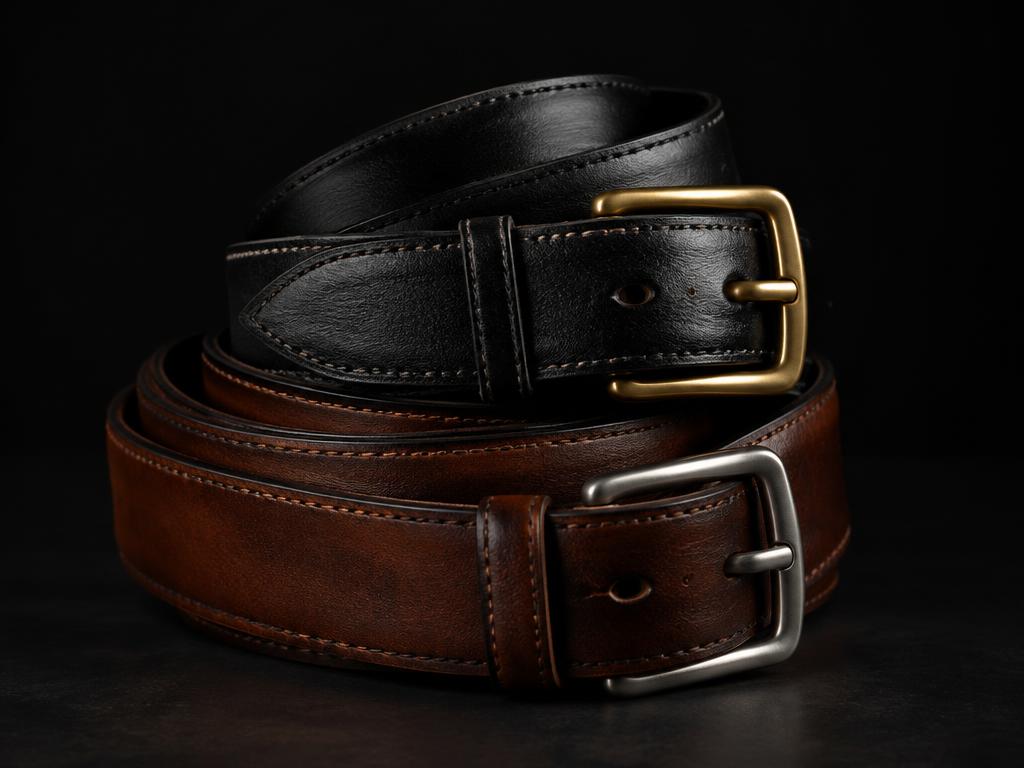
Quick answer
To find a reliable leather belt manufacturer in India, shortlist units that already make leather belts rather than agents who place them, and test them on product-specific detail — substance, which part of the hide the strap is cut from, edge burnishing, hardware attachment and stitch pitch, and how they handle sizing and length. Then order a paid sample in the material you intend to buy, measure it against your own drawing, confirm the minimum of around 300 pieces per design in writing, and run a pilot with the real branding and the real packaging before scaling. India Leather Manufacturer in Kanpur manufactures leather belts on its own floor for brands worldwide.
Key takeaways
- Vet on this product, not on leather in general — ask about substance, which part of the hide the strap is cut from, edge burnishing, hardware attachment and stitch pitch.
- A maker answers in millimetres and stitch pitch; a middleman answers in adjectives.
- Sample in the material you intend to buy, then measure the sample against your own drawing.
- Expect minimums from around 300 pieces per design, applied per design rather than per order.
- Run the pilot with real branding and real packaging, because that is where orders usually go wrong.
What a leather belt actually takes to make
A belt is a single strip of leather that has to survive being pulled hard, every day, at one fixed point. There are very few components and nowhere to compensate: the strap leather, the buckle attachment and the keeper either hold or they do not.
Before you judge a supplier, it helps to know what the job involves. Clicker-press cut parts, skived folds, glued and then stitched assembly; interlining wherever a panel has to stay flat in the pocket. Lockstitch at 7–9 stitches per inch in polyester or bonded nylon; bar tacks at pocket mouths; hand saddle-stitching on request. None of that is exotic, but it is specific, and a supplier who cannot describe their own version of it in those terms is unlikely to be the one holding the knife.
- Face materials — vegetable-tanned or chrome-tanned cow and buffalo strap leather, single-ply or two plies laminated; split and PU for price-led or uniform programmes.
- Typical substance — 3.0–4.0 mm (8–10 oz) single-ply for dress and jeans belts, or two thinner plies laminated for a reversible or lined belt.
- Lining — pig suede, goat skin, bonded leather or printed polyester, with non-woven interlining behind card panels to stop stretch.
- Hardware and plating — pin, plate, roller and auto-lock buckles in brass, nickel, gunmetal or matt black; snap-fit or stitched-in attachment.
- Closure — pin buckle with five holes at standard spacing, or a reversible rotating buckle.
- Edge finish — burnished and edge-painted, or creased and painted; a crease line along both edges is the usual dress-belt finish.
Where leather belts are made in India, and which cluster suits you
Kanpur and Chennai for finished leather and small-goods assembly, Kolkata for lighter goat and sheep articles, Delhi NCR for fashion-led sampling. Small leather goods are the most widely made category in India, which is good news for choice and bad news for vetting — the number of workshops that can cut a wallet is far larger than the number that can hold an edge finish across a few thousand pieces.
India has the advantage of tanning, hardware, lining and component supply in the same clusters as the sewing, which is why sampling cycles here are short and why a mid-sized programme does not have to wait behind a container-scale one. We are in Kanpur, and we make leather belts on our own floor rather than placing them.
Geography is the least useful filter, though. Two units on the same street can be a real factory and a trading desk with a showroom. What follows is how to tell them apart for this product specifically.
Telling a leather belt maker from a middleman
There is nothing wrong with a good agent, and some of them add real value. The problem is paying factory-plus margin for a layer that cannot change anything, cannot explain a defect and disappears when a lot goes wrong. One question usually settles it.
Ask which part of the hide the strap is cut from, and what happens at the fold and the keeper. A maker talks about back and butt leather, burnishing and rivet-set attachment. A trader talks about premium leather and strong buckles.
Three things a maker can show you on a video call
Ask for a live walk, not a recorded tour. The things you are looking for are unglamorous and very hard to fake in real time.
- The cutting room, with dies on the rack and a clicker press in use — ask to see a die for a product like yours
- The assembly line actually running leather belts or a close relative, with work in progress on the tables
- The finishing and QC bench, with approved reference samples hanging up and a photo-report station
What the answers should sound like
A maker answers in numbers and process steps. Substance in millimetres, stitch pitch per inch, plating batch, coat count on an edge, lead time by operation. A middleman answers in reassurance. You are not testing their English or their politeness — you are testing whether the person answering has ever stood next to the machine.
A vetting scorecard you can fill in during one call
Score each supplier out of ten on the rows below. In our experience the gap between a factory and a trading desk shows up in the middle rows, not the first two — anyone can talk about leather, and almost anyone can send photographs.
| What to check | A maker sounds like this | A middleman sounds like this |
|---|---|---|
| Who patterns the piece | Names their pattern master and talks through how a change would be made | Says the design team will look at it and comes back in three days |
| Leather sourcing | Names the article, the tannage and the substance, and posts physical swatch cards | Offers genuine leather with no article name and no weight |
| Strap cutting and load points | Names the area of the hide the strap comes from and pull-tests the attachment on the sample in front of you | Says the leather is thick and strong and sends a photograph of a coil of cut straps |
| Hardware | Talks about plating batches and finish consistency: pin, plate, roller and auto-lock buckles in brass, nickel, gunmetal or matt black; snap-fit or stitched-in attachment | Says branded-quality hardware and will not name the plating |
| Stitch and edge spec | Quotes a stitch pitch and an edge build: lockstitch at 7–9 stitches per inch in polyester or bonded nylon; bar tacks at pocket mouths; hand saddle-stitching on request | Says good stitching and neat finishing |
| Sampling | Quotes a sample fee and a date, and the sample comes back with your corrections visibly made | Sends an existing piece that is close to your sketch and calls it a sample |
| Problems mid-order | Tells you about a leather shortage or a plating delay before you ask, and proposes an option | Goes quiet, then reports that everything is on schedule |
| Inspection | Welcomes your inspector, shares an AQL report with photographs, retains a shipment sample | Resists third-party inspection or wants to pick the inspection date themselves |
Write the brief before you contact anybody
Shortlisting is cheap; comparing incomparable quotations is expensive. Send every supplier the same brief and you will get answers you can actually line up side by side. For leather belts the brief needs to cover:
- The styles you want, from dress belt, casual jeans belt, reversible belt, braided belt — each one is a separate pattern, so name them rather than saying the category
- Quantity per style and per colour, and whether you intend to repeat
- Material direction: genuine leather, PU, or both for a good-better range — with the finish you have in mind
- Your size chart, and whether length is measured to the first hole, the centre hole or the tip
- Strap width in millimetres and the tip shape — rounded, pointed or square
- Buckle type and plating, and whether it is snap-fit so the wearer can change it or stitched in
- Branding method and the artwork as a vector file, with the finished size you want the mark at
- Packaging: poly bag, dust bag, printed box, swing tags, barcodes, and whether the goods go into a marketplace fulfilment centre
- Your target Incoterm and destination, so freight and documents are quoted on the same basis
The leather belt questions that separate the two
Generic sourcing questions get generic answers. These are the ones that are specific enough to this product that a supplier either knows or does not. They come straight off the spec sheet we work to, so they are fair questions — not trick ones.
- What substance do you cut the strap at, and which part of the hide does it come from? (Ours: 3.0–4.0 mm (8–10 oz) single-ply for dress and jeans belts, or two thinner plies laminated for a reversible or lined belt.)
- What do you line it with, and does the lining change the fit? (Ours: pig suede, goat skin, bonded leather or printed polyester, with non-woven interlining behind card panels to stop stretch.)
- How do you finish the edge, and how many coats? (Ours: burnished and edge-painted, or creased and painted; a crease line along both edges is the usual dress-belt finish.)
- What stitch pitch do you run and where do you bar tack? (Ours: lockstitch at 7–9 stitches per inch in polyester or bonded nylon; bar tacks at pocket mouths; hand saddle-stitching on request.)
- Sizing & length: Sizes are built to your size chart with holes at standard spacing. State whether length is measured to the first hole, the centre hole or the tip.
- Width & tip shape: Common widths are 30, 35 and 38 mm; tip can be rounded, pointed or square, cut on a die so the shape is identical across the run.
- Buckle attachment: Snap-fit buckles let the wearer change buckles; a stitched-in buckle is cleaner but fixed. Decide early — it changes the pattern.
- How many colours per style can I run at your minimum of around 300 pieces, and does the split change the price?
- Do you own the branding equipment, and will you run a trial on my chosen material before bulk?
- Will you accept a third-party inspection and share a photo report before dispatch?
What to inspect on the leather belt sample
The sample is the only part of this process that cannot be faked, so spend time on it. Keep it, and keep the supplier's counter-sample too — the approved pair becomes the reference that any later claim is judged against.
Beyond the obvious look-and-feel, these are the checks we run on this product in our own line. Run them yourself on the sample you are sent:
- Measure it against the drawing you sent, at every dimension you specified, rather than eyeballing it
- Tensile & strap pull — Sampled belts are pulled at the buckle end and the keeper, which is where a belt fails, and checked for stitch draw or leather stretch.
- Hole spacing & sizing — Hole pitch, first-hole position and overall length are gauged against your size chart on every size in the lot.
- Buckle & keeper fit — Buckle tongue fit, keeper width and snap function are checked so the belt does not rattle or pull out of the keeper in wear.
- Stitch density and bar tacks: count the stitches per inch and check the bar tacks are complete at every stress point
- Branding: check depth, position and legibility against the artwork, at the size you will actually sell
- Smell and finish transfer: rub a light cloth over the face and lining to check nothing comes off
Ask for the sample in your real material
A sample made in whatever leather was on the shelf tells you about the construction but nothing about the product. If you are buying a particular leather article, insist it is sampled in that, because substance, tannage and finish change how every operation behaves.
Inspect the packaging too
Packing is where a good order quietly becomes a bad delivery. Tissue or individual poly bag, then a kraft sleeve or branded box; usually 50–100 pieces per export carton depending on size. Ask for the sample to arrive in the packing you intend to ship in, and check the carton marking, the barcode placement and the polybag spec at the same time.
Red flags worth walking away from
None of these on its own proves bad faith. Two together, on a first order, is usually enough.
- Refusing a paid sample, or insisting that you order bulk from a photograph
- A price far below the rest of your shortlist with no explanation of which material or construction changed
- No willingness to show the production floor live, or a tour that never reaches the cutting room
- Specifications only in adjectives — premium, heavy-duty, export quality — and never in millimetres
- Resistance to a written tech pack, or changes to the spec that appear only after you have paid a deposit
- No third-party inspection, or inspection permitted only on a date they choose
- Certification claims produced on request as an image, without a certificate number you can verify at the issuing body
How to structure a pilot order
The safest first order is deliberately small and deliberately complete — it should exercise every part of the process, not just the sewing. For leather belts we would structure it like this:
- Sample round one in your chosen material, with a written comment list back from you rather than a verbal approval
- Sample round two with the corrections made, then a signed-off reference sample held at both ends
- A pilot at around the minimum — 300 pieces per design — in one or two colours rather than four
- Full branding and real packaging on the pilot, so artwork, boxes and barcodes are proven before volume
- A final AQL 2.5 inspection with a photo report, and your own inspector if you want one
- A short debrief on what the lot taught you, written into the tech pack before the repeat order
- Then scale, keeping the same pattern, dies and reference sample on file so the repeat matches
How India Leather Manufacturer works with Leather Belts buyers
We are a manufacturer in Kanpur with 180+ skilled artisans and capacity of 60,000+ pieces / month, making leather belts for menswear brands, uniform suppliers, western-wear labels. Samples go out in 7–12 days once the tech pack, leather and hardware are agreed; bulk runs 30–45 days after you approve the sample.
Send a brief, a sketch, a reference photograph with measurements, or a physical piece you want matched — any of those is enough for us to come back with a sampling plan and a quotation against a written spec. We will also tell you where your brief is going to be expensive, which is usually more useful than the number itself.
Ready to start your order?
Send your brief and get a quotation and sampling plan within one working day.