Industry Guides
How to Start a Leather Goods Brand: A Step-by-Step Guide
By the India Leather Manufacturer production teamUpdated 13 min read
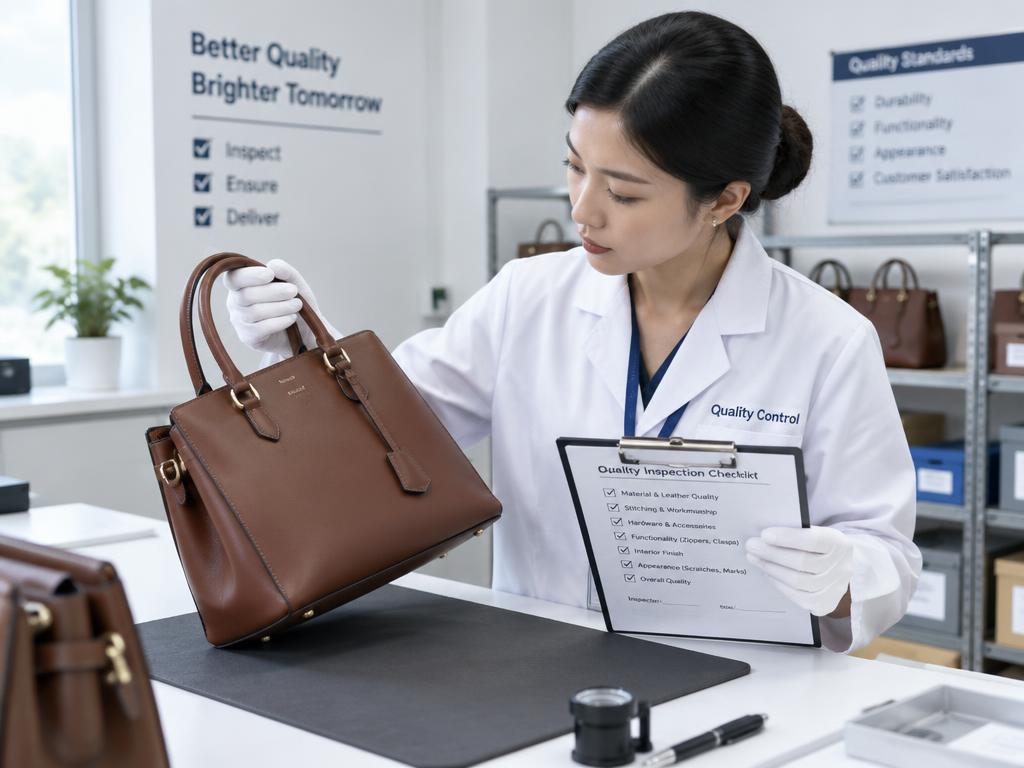
Quick answer
Start by deciding who you are selling to and at what price, then build a first range of three to five SKUs rather than a catalogue. Choose a manufacturer that works at a low MOQ, buy a sample before you buy a run, settle logo artwork, labels and barcodes early, and keep packaging simple on run one. Place a small first order, sell it, and let the reorder data decide what you develop next.
Key takeaways
- A first range of three to five SKUs sells better than fifteen, because the budget goes into depth of stock rather than breadth of catalogue.
- Private label removes design and pattern risk from a launch; keep a development round in reserve for after you have sales data.
- Barcodes must come from your own GS1 account. No factory can allocate them for you, and marketplaces check the prefix.
- Packaging print minimums are set by the print supplier and are routinely higher than the leather MOQ — plan plain stock plus a printed swing tag for run one.
- Price from landed cost, not from ex-factory cost. Freight, duty, clearance and your own inbound handling all sit between the two.
- Work the calendar backwards from your launch date, and put the review time at your end into the plan — it is the stage founders always underestimate.
Decide what you are selling before you decide what you are making
The brands that survive their first reorder have usually answered three questions before they look at a single swatch: who is the customer, what do they already buy instead, and what has to be true about this product for them to switch. Those answers set the price point, and the price point sets the material, the construction and the factory — in that order, not the reverse.
A positioning that is only a material ('full-grain leather') or only an aesthetic ('minimal') is not yet a position. Something has to be specific: a use case nobody serves well, a fit for an object, a market, a channel, a price band where the available products are visibly bad. Leather goods is an old and crowded category; the room is in specificity rather than in taste.
Be realistic about what a leather product has to cost to be good. If the target retail price cannot support a grain leather and a properly finished edge, the honest options are to move up the price band, to change the construction, or to run a good PU or microfibre and be straightforward about it. Thin coated split pretending to be something better is the one route that reliably produces returns.
Choosing a first range: three to five SKUs, with distinct jobs
A first range should be small enough that you can afford depth in each line. A founder with a fixed budget spread across fifteen SKUs ends up with the minimum of everything and sells out of the two that work while sitting on thirteen. Three to five, each with a distinct commercial job, is a far stronger opening hand.
| Role in the range | Typical pieces | What it has to do |
|---|---|---|
| Hero | A tote, backpack, briefcase or messenger | Carry the brand's design identity and be the piece you photograph |
| Entry point | Card holder, keychain, luggage tag | Let a new customer buy you cheaply and come back |
| Everyday volume | Wallet, belt, phone case | Reorder reliably and fund the rest of the range |
| Giftable | Passport holder, notebook cover, desk piece | Carry the Q4 and festive windows with packaging already in place |
| Optional extension | A second colourway rather than a second shape | Widen the range without adding a pattern, a die or an MOQ |
Private label or your own design for the first run
Almost every first range should be private label, and the reason is risk rather than budget. Putting your brand on a pattern that has already been cut thousands of times removes two of the three things that can go wrong on a launch: the design might not work, and the pattern might not be right. What remains is the commercial risk, which is the one you are actually in business to take.
You still control everything a customer sees: the leather article and substance, the colour, the lining, the hardware plating, the thread and edge-paint colour, the mark on the front and the box it arrives in. What you do not get is exclusivity on the silhouette — the base pattern stays with the factory and remains available to others, which is exactly what removes the development cost and the development time.
Keep a development round in the plan for later. Once real sales tell you which style deserves a pattern of its own, commission it as a development and produce it as OEM. That sequencing — private label to learn the market, OEM to defend a position in it — is how most of the brands we work with have actually grown.
Finding and vetting a manufacturer
The first filter is whether the company you are talking to manufactures or trades. Both can be legitimate, but they behave differently: a trading house will be flexible on product range and vague on process, while a factory will be specific about machinery and construction and will decline things that do not suit its floor. Ask to see the pattern room and the die store on a video call — they are the two areas that cannot be borrowed for an hour.
- Ask which product families they actually run every week, not which they can quote
- Ask for the MOQ per design and whether colours can be mixed inside it
- Ask what sampling costs and how long it takes, and whether the charge is credited against a bulk order
- Ask to see a current product in the material and construction you want, not a portfolio photograph
- Ask what their default AQL is and whether third-party inspection is welcome
- Ask what they will not do — a factory with no limits is describing a catalogue, not a capability
- Send a written brief to two or three suppliers and compare how they answer rather than what they charge
Sampling: the cheapest due diligence you will ever buy
A sample tells you three things a quotation cannot: whether the idea works in the material, what it really costs to build, and whether this particular factory can hold the detail you care about. It is the lowest-cost risk reduction available to a new brand, and skipping it to save a fortnight is the single most expensive decision a founder commonly makes.
Expect a first sample in 7–12 days once the brief and material are settled, plus one revision round. Sample charges are quoted per sample and are commonly credited against a confirmed bulk order — ask for that to be written on the quotation rather than assumed. Courier charges are billed at cost and are not trivial on an international route, so consolidate rather than shipping pieces one at a time.
When the sample arrives, review it against a list rather than an impression. Measure it. Fill it — a wallet with cards and notes in it, a case with the device in it, a bag loaded — because that is where slot pitch, cavity tolerance and handle drop mistakes become obvious. Flex the painted edges. Cycle the zip twenty times. Then write your comments point by point, because a numbered list gets answered point by point and a paragraph gets answered in general.
Branding, labels and barcodes — settle these early
Artwork is the most common cause of a launch slipping, and it slips at the end, when goods are finished and sitting in packing. Settle it at the same time as the sample rather than afterwards.
Your logo needs to be vector — AI, EPS, PDF or SVG — with the fonts outlined and supplied at final size. Hairlines and small reversed-out text fill in on leather, so a monogram usually needs around 8–10 mm of width to stay legible and a wordmark considerably more. The branding method is chosen against the artwork and the leather: a blind deboss is the most durable, hot foil gives contrast on dark leather but abrades at high-wear points, laser needs no tooling and handles fine detail and personalisation, and a metal plate reads as the most expensive and costs the most to tool.
Barcodes have to come from your own GS1 membership, because the number is issued against your company prefix. No factory can allocate GTINs on your behalf, and marketplaces check. Label copy — composition, care, country of origin, and any importer details your market requires — is also yours to specify; we print and apply exactly what you send rather than guessing a house standard.
Tool once, at the right size
A brass die is engraved for one mark at one size and is kept on record, which means every style in your range that carries the mark at that size needs no further tooling. Decide the branding size across the whole range before you order the first die and you will tool once instead of three times.
Packaging on a first run
Packaging is where first-time budgets go missing, because its economics are completely different from the product's. Printed rigid boxes, printed dust bags and printed tissue all carry minimum print quantities set by the print supplier, and those minimums are routinely higher than the MOQ on the leather itself. A founder ordering 100 wallets can easily find themselves quoted 1,000 boxes.
The practical answer for run one is a plain stock box or a non-woven dust bag with a printed swing tag and a care card. Printing is concentrated on the two small items with low minimums, the unboxing still feels considered, and no capital is tied up in nine hundred surplus boxes. Move to printed packaging on the reorder, when the volume justifies it and you know which SKUs survived.
Remember that packaging also costs freight. A rigid box ships assembled and takes cubic metres; the same presentation in a folding carton ships flat. On a sea shipment that difference is real money, and it is worth asking for both to be quoted.
Costing a landed price rather than an ex-factory price
The number on a factory quotation is not your cost of goods. Between it and your warehouse sit several line items, and a retail price built on the ex-factory figure alone is the most common reason a new brand's margin disappears in month three.
- The Incoterm, which determines how much of the freight chain is already inside the quoted figure
- Origin handling and export documentation where you are buying on EXW or FCA terms
- Ocean or air freight for your lane, plus destination terminal handling
- Marine insurance, which is minimum cover under CIF and worth upgrading on a high-value consignment
- Import duty and import VAT or sales tax — confirm the rate in force for your heading with your own customs broker
- Customs clearance and brokerage fees, and any port storage if the entry is delayed
- Inbound haulage to your warehouse or 3PL, and the 3PL's receiving charge
- Your own packaging, labels and any prep work done after arrival
- A realistic allowance for returns and for pieces lost to damage in transit
Placing the first order, and planning the reorder before you need it
A first order is typically placed against a 30–50% advance with the balance before dispatch, and it is the advance that releases material booking — so the production window starts from the payment, not from the purchase order. Confirm the style, colour split, quantity per design, the destination port or city, the Incoterm, your consignee and forwarder details, and the carton and label specification in writing before anything is cut.
Then plan the reorder immediately, because the reorder is where new brands get caught. Repeat production runs 30–45 days plus transit; if you wait until stock runs low to reorder, you are out of stock for two months. The second advantage of reordering early is material: booking the leather for a larger combined quantity keeps the dye lot together and avoids a visible shade step between your first and second runs.
The launch calendar, worked backwards
Pick the date you want stock on the shelf or in the fulfilment centre and count backwards. The figures below are the ones we publish for our own floor; your freight lane and your own review speed are the two variables that move the total most.
| Step, in reverse | Allow |
|---|---|
| In-warehouse date you are planning for | Fixed point |
| Sea or air transit for your lane, plus clearance | Varies by lane — see the market pages |
| Final inspection and export packing | 2–3 days |
| Bulk production | 30–45 days |
| Material booking after the advance clears | 5–10 days |
| Your sample approval and artwork sign-off | Depends on you — plan a week, not a day |
| Branded sample | 7–12 days |
| Shortlisting styles, quoting and choosing branding | 3–5 working days |
Ready to start your order?
Send your brief and get a quotation and sampling plan within one working day.