Product Development
PU Leather Bags Tech Pack & Sampling Checklist for Brands
By the India Leather Manufacturer production teamUpdated 16 min read
Quick answer
A PU leather bag tech pack needs dimensioned drawings, the face article and its substance, lining and reinforcement, a hardware schedule with plating, the closure, edge finish, stitch spec, construction method, branding method with size and position, labels and packing, and the quantity with its colour split. The field we most often have to ask for is how the bag holds its shape. With a settled brief, a first sample takes 7–12 days and bulk follows in 30–45 days after approval.
Key takeaways
- Every blank field is a decision the factory makes for you, and an unspecified field defaults to the cheapest reasonable answer.
- On PU leather bags the dimensions that govern the pattern are not the obvious ones: all the usual bag dimensions, plus the PU article with its grain, coating and backing.
- Grain & emboss, Structure on a budget, Material continuity — the fields a generic template has no row for.
- Substance in mm, the hardware schedule with plating, and the edge finish are the three most under-specified fields in leather sourcing.
- A marked-up physical sample couriered back resolves more than three rounds of email.
- The sealed sample, not the drawing, is what final inspection measures against.
What a complete PU leather bag tech pack contains
A tech pack is not paperwork. It is the list of decisions that someone has to make before your PU leather bag can be cut, and every line you leave blank is a decision the factory makes on your behalf — usually the cheapest reasonable one, because that is what an unspecified field defaults to.
The table below is the version we would want to receive for PU leather bags. Treat the third column as the real argument for completing a field: none of these omissions stops a sample being made, which is precisely why they are expensive.
| Section | What to specify on PU leather bags | If you leave it out |
|---|---|---|
| Technical drawing & dimensions | All the usual bag dimensions, plus the PU article with its grain, coating and backing. | We pattern from your reference instead, and the first sample is an interpretation rather than a match. |
| Face material | PU leather on woven or non-woven backing in a wide grain range, plus vegan and recycled-backed alternatives; genuine leather trims can be mixed in. | You get the article that best fits the target price, which may not be the hand or the finish you had in mind. |
| Substance (thickness) | 0.9–1.3 mm PU face material, with interlining and board chosen to give the body the structure the design needs. | The default is the cheapest substance that holds the shape, and your sample feels thinner and softer than your reference. |
| Lining & reinforcement | Cotton twill, canvas, poly twill or suede; printed or jacquard lining with your artwork from moderate quantities upward. | Interlining is the invisible half of the product. Leave it out and the piece stretches, bows or collapses in a way the drawing never showed. |
| Hardware & plating | Zips (YKK or equivalent), D-rings, swivel snaps, rivets, base feet, magnetic snaps and turn-locks in antique brass, nickel, gunmetal or a plating matched to your reference. | Plating tones get mixed. A bright and a satin finish on one piece is immediately visible and cannot be corrected after assembly. |
| Closure | Zip top, magnetic snap, turn-lock, or a flap with strap and buckle. | The closure changes the pattern, not just the parts list, so switching it after sample approval means a new sample. |
| Edge finish | Turned edge on lined panels, edge paint on straps and handles, burnished raw edge where the leather is vegetable-tanned. | Edge treatment is most of what a buyer judges at arm's length, and painted, turned and burnished edges are three different operations at three different prices. |
| Stitching & thread | Lockstitch at 6–8 stitches per inch in bonded nylon; double rows and bar tacks at strap anchors and handle roots. | Stitch density and thread colour set the whole visual character. An unspecified stitch is the factory's default, which is chosen for speed. |
| Construction | Clicker-cut panels, skived seams, strap anchors reinforced with rivets or webbing tape, optional base board and metal feet. | Two pieces built to the same dimensions by different methods are different products. Name the method. |
| Branding | Method, finished size in millimetres and position — normally the front panel, a strap keeper or the inside pocket. | The mark goes where it is easiest to reach, at whatever size the available die suits, and it will not be in the same place on the reorder. |
| Labels, tickets & packaging | Non-woven dust bag, tissue or airbag in the body and handles, poly bag, then 6–12 pieces per export carton depending on size. | Labels and print have their own minimums and longer lead times. Left to the end, they become the reason the shipment is late. |
| Quantity, colour split & price target | 300 pieces per design is the minimum. PU runs easily in many colours — four to eight per style is realistic at MOQ, which is why it suits seasonal and promotional ranges. | Materials get booked for the wrong quantity, and a colour split named later can mean a second leather booking. |
Dimensions and drawings: what we actually measure
All the usual bag dimensions, plus the PU article with its grain, coating and backing. On a price-led range, state how the structure is achieved, because PU has none of its own.
Draw the front, back, side and interior, dimension them, and mark which dimensions are critical and which can move a few millimetres. A pattern-maker will hold the ones you flag and compromise on the ones you do not — so flag them.
Beyond the standard fields, PU leather bags carry 3 specification decisions that exist nowhere else in the catalogue — grain & emboss, structure on a budget, material continuity — and they are set out in full further down this page. A generic tech pack template has no row for any of them, which is exactly why they are the ones that get missed.
The views worth drawing
Front, back and side elevations with overall dimensions; an interior view with the pocket, slot or nest layout; and a detail view of anything unusual — a mechanism, a fixing, a reinforcement.
Draw the closure explicitly as well. On PU leather bags it is normally zip top, magnetic snap, turn-lock, or a flap with strap and buckle. and which one you have chosen changes the pattern rather than just the parts list, so it belongs on the drawing and not in a later email.
A hand sketch with dimensions beats a beautiful render with none. We have patterned plenty of products from a photograph and three measurements; we have never patterned one from a mood board.
Tolerances, and which ones matter
Finished dimensions on a cut-and-sewn leather product typically hold within a few millimetres, because leather is a natural material that moves with humidity and with the hide it came from. Tell us which single dimension has to be exact and we will build the pattern around holding it.
A tolerance you did not state is a tolerance you cannot reject against at final inspection. Put the critical ones on the drawing with a figure.
Materials: article, substance and lining
For PU leather bags we normally work in PU leather on woven or non-woven backing in a wide grain range, plus vegan and recycled-backed alternatives; genuine leather trims can be mixed in.
Substance: 0.9–1.3 mm PU face material, with interlining and board chosen to give the body the structure the design needs. Substance is the single most under-specified field in leather sourcing and the one that most changes how a product feels in the hand, so give us a figure or a reference piece rather than an adjective.
Lining: cotton twill, canvas, poly twill or suede; printed or jacquard lining with your artwork from moderate quantities upward.
- Name the article, the tannage and the finish, not just the colour — 'black leather' covers hundreds of materials at dozens of prices.
- Give a Pantone reference or, better, a physical swatch. Leather is dyed, not printed, so a reference is approved as a shade range rather than a single value.
- Say whether a visible grain, a pull-up effect or a milled hand is wanted, because those are finished-leather decisions made at the tannery.
- Confirm any restricted-substance requirement in writing, so the leather and trims are booked against it rather than retro-fitted.
- Tell us the bulk quantity you have in mind at the sampling stage: it changes which articles are realistic to book.
Where this usually goes wrong
Buyers for PU leather bags — high-street retailers, promo suppliers and e-commerce sellers — almost never get the colour wrong. What they get wrong is the article: a reference product in a soft milled hide, matched against a quotation built on a firmer pigmented one, at the same colour and the same thickness. The sample arrives dimensionally perfect and feeling like a different product.
The fix costs nothing. Send a physical reference, or name the article and tannage, and ask us to confirm in writing what we have actually booked against it before the sample is cut.
Hardware, closure and the schedule that goes with them
Hardware on PU leather bags is typically zips (YKK or equivalent), D-rings, swivel snaps, rivets, base feet, magnetic snaps and turn-locks in antique brass, nickel, gunmetal or a plating matched to your reference.
Closure: zip top, magnetic snap, turn-lock, or a flap with strap and buckle. The closure is a pattern decision rather than a parts decision, so changing it after sample approval means a new sample, not a swap.
The hardware schedule is where a tech pack earns its keep. Every part needs a type, a size, a plating and a finish, because plating tone varies between part types and between batches — and once a piece is assembled, a mismatch cannot be corrected.
Construction, stitching and edge finish
Construction: clicker-cut panels, skived seams, strap anchors reinforced with rivets or webbing tape, optional base board and metal feet.
Stitching: lockstitch at 6–8 stitches per inch in bonded nylon; double rows and bar tacks at strap anchors and handle roots.
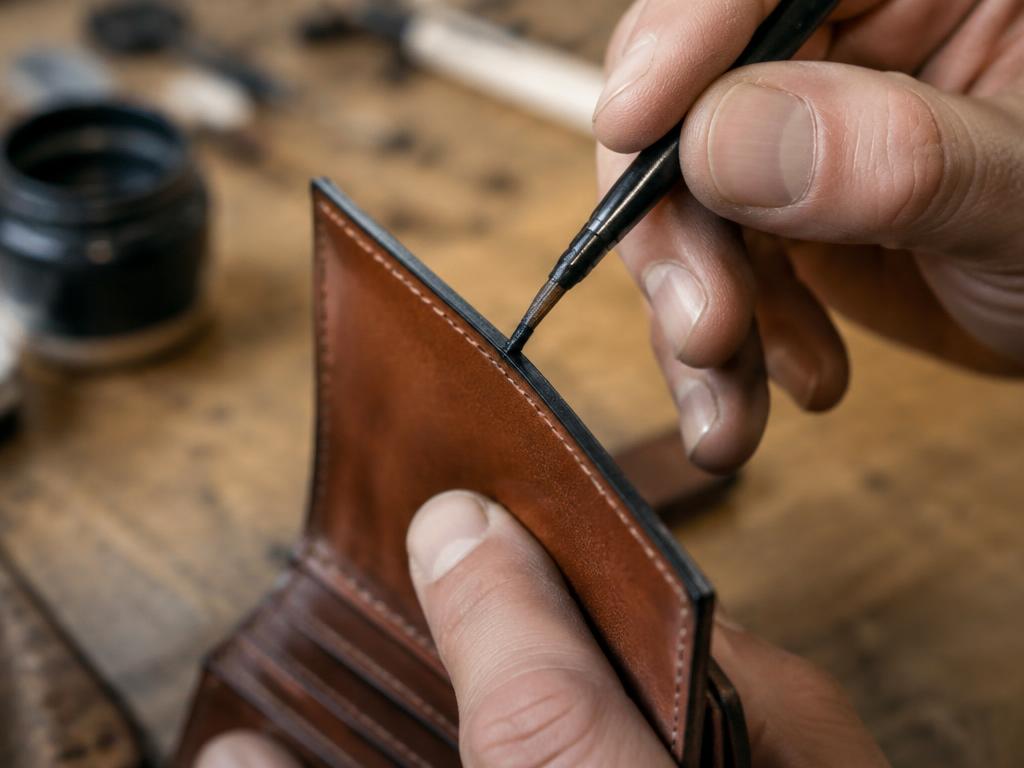
Edge finish: turned edge on lined panels, edge paint on straps and handles, burnished raw edge where the leather is vegetable-tanned. Edges are what a buyer inspects first at arm's length, and painted, turned and burnished edges are three different operations at three different costs — so name the one you want rather than leaving it to the quotation.
The fields that only matter on a PU leather bag
Every product line has a handful of specification fields that do not exist anywhere else in the catalogue, and they are the ones a generic tech pack template leaves out. These are the ones for PU leather bags.
| Field | What to specify |
|---|---|
| Grain & emboss | Saffiano, litchi, pebble, croc and smooth grains are stock. A proprietary embossed grain needs its own roller, so treat it as a volume decision. |
| Structure on a budget | On PU bags the structure comes from interlining and board rather than heavy material, which is how a light bag still looks substantial. |
| Material continuity | PU articles get discontinued. For a repeat programme we reserve material against your forecast rather than matching a new batch later. |
Branding, labels and packaging in the tech pack
Branding belongs in the tech pack with a method, a finished size in millimetres and a position — normally the front panel, a strap keeper or the inside pocket on PU leather bags. Send the logo as vector with fonts outlined on day one and branding runs in parallel with sampling, costing nothing in lead time.
Packing is usually non-woven dust bag, tissue or airbag in the body and handles, poly bag, then 6–12 pieces per export carton depending on size. Labels, tickets, barcodes and printed packaging all have their own minimums and their own lead times, and those lead times are frequently longer than the leather production they travel with. Settle them at sample approval, not at shipping.
What to send with the brief
A sampling brief does not have to be a tech pack. It has to fix the things you would be unhappy to see wrong. In practice that is a reference, some dimensions, a material, a branding file and a quantity.
- A sketch, photograph, drawing, tech pack or a physical counter-sample we can work from.
- The overall dimensions and the three or four features that are genuinely non-negotiable.
- A counter-sample if you are matching an existing bag, marked up where you want it changed
- The largest thing the bag has to carry — a laptop, a file box, a water bottle — with its dimensions
- Leather or PU article and the price point you are designing back from.
- Logo artwork as vector, with fonts outlined, if you want the sample branded.
- The bulk quantity you have in mind, because it changes material and construction choices.
- A courier address — samples go by air and transit is typically 3–7 days depending on destination.
If you do not have a tech pack at all
You do not need one to start. Our sample room works from a sketch, a photograph, a link or a competitor's product, and most of our development work arrives that way. We make the pattern and the measurement sheet, and you get a specification out of the process rather than having to produce one going in.
Many brands start instead from a style we already have patterns for — vegan tote, shoulder bag, school bag and cosmetic bag — and customise from there. That skips development entirely, which is the fastest and cheapest route to a branded first sample.
The sampling rounds, and what to check at each
Samples in 7–12 days once the brief, the artwork and the materials are settled, and a revision round after that is usually quicker because the pattern already exists. The published figure covers the making; what normally stretches a sampling calendar is the review at your end, so plan for it.
- Brief and feasibility review — we read the drawing, photo or counter-sample, ask the questions that change the pattern, and give an opinion on cost and buildability before any leather is cut. Typically one to three working days.
- Pattern-making — a hard pattern with seam and turn allowances plus a measurement sheet. Check the measurement sheet now: it is the cheapest point in the whole project at which to be difficult.
- Material selection — the leather article, lining, thread and hardware are confirmed against swatches, and anything we have to substitute is flagged in writing with the difference stated.
- First sample — cut, skived, stitched and finished in your chosen article with your branding struck on it. Samples in 7–12 days from a settled brief, with photographs and video sent before the parcel leaves so your review can start early.
- Your review and one revision — mark up the physical sample and courier it back if you can; it removes more ambiguity than any email thread. Every comment is answered in writing with what we changed and what we could not.
- Sealed sample and bill of materials — two samples sealed and signed, one with you and one retained here, plus a bill of materials listing every component. This is what final inspection measures against.
- Release to production — pattern, cutting dies, logo die and its strike settings, bill of materials and the sealed sample filed together. Bulk in 30–45 days from there, and a repeat order a year later restarts at cutting rather than at the brief.
What to check hardest on the first sample
Load it to its intended weight and hang it. Check the strap anchors, the base sag, and whether the opening still closes when the bag is full.
It is also worth knowing what we will be checking in bulk, because those are the failure modes this product actually has: strap & handle load check, zip cycling, hardware finish & rub. If the first sample is weak on any of them, say so now — a tolerance accepted at sampling becomes the sealed standard, and final inspection will measure the whole run against it.
How to write sample comments that get acted on
Number each comment, say what is wrong and what you want instead, and separate the must-fix items from the preferences. 'Make it feel more premium' cannot be actioned; 'reduce closed thickness by 3 mm and change the edge from painted to turned' can.
If you can, mark up the physical sample with a pen and courier it back. One marked-up sample resolves more than three rounds of email, and it costs a courier charge.
The sealed sample, and why it governs the bulk run
At approval, two samples are sealed and signed: one stays with you as the reference you hold us to, one stays in the factory as the production benchmark. Bulk in 30–45 days after that, and final inspection is measured against the sealed sample rather than against the drawing.
A sealed sample sets a standard, not a photocopy. Leather is a natural material: tone and grain vary hide to hide and lot to lot, plating varies batch to batch, and the more character an article has the more it moves. If you need a tight shade band, say so before the leather is booked rather than at inspection.
- Strap & handle load check — Handles and straps are loaded on sampled pieces to confirm anchors, rivets and bar tacks hold without the leather tearing or the stitching drawing.
- Zip cycling — Sliders are run the full length of the tape repeatedly and checked for catching at the corners, where a badly set zip almost always shows first.
- Hardware finish & rub — Plated hardware is rubbed and checked against the approved sample for colour and gloss so one lot does not arrive a different shade of brass.
Ready to start your order?
Send your brief and get a quotation and sampling plan within one working day.