Import Guides
Bulk Custom Leather Goods Supplier in India: GST, HSN, Delivery & Gifting
By the India Leather Manufacturer production teamUpdated 15 min read
Quick answer
Ordering from an Indian factory is a domestic purchase, not an import: no customs step, no bill of lading and no clearing agent. India Leather Manufacturer invoices on a GST tax invoice with the HSN code against each line, raises the e-way bill before the vehicle leaves Kanpur, and delivers in about 2–6 days to cities including Delhi, Mumbai, Bengaluru, Chennai, Hyderabad, Kolkata. Allow about 5–9 weeks from go-ahead on a new design, or 32–51 days on a repeat.
Key takeaways
- A domestic order needs a GST invoice, a delivery challan, an e-way bill and the transporter's LR — not an export document set.
- HSN 4202 covers bags, cases and wallets; 4203 covers belts, gloves and leather apparel; 4205 covers patches and desk pieces. The 8-digit code goes on the invoice line.
- Dispatch is by full-truck or part-load road, rail parcel on long-haul lanes, or air courier when the date is tight — about 2–6 days to most cities.
- Work back about 9 weeks from the date you need goods in hand; a repeat of a held pattern runs 32–51 days.
- Diwali gifting books up in the same six weeks every year, so the constraint is capacity, not production time.
- Personalisation lists and city-wise splits belong on the purchase order, not at dispatch.
Who buys from us inside India, and what they buy
India Leather Manufacturer manufactures in Kanpur, Uttar Pradesh, and sells directly to Indian businesses — so for a buyer in Delhi or Mumbai this is a domestic purchase, not an import. There is no customs step, no bill of lading and no clearing agent involved: a GST tax invoice, an e-way bill and a transporter's lorry receipt are the whole paperwork set.
Indian buyers come to us because the factory is in the country they are selling in: one GST invoice, no currency exposure, no freight to manage and a sample in your hand inside a fortnight.
The four kinds of order we run most
Four patterns cover most of what leaves the unit on a domestic invoice, and each one wants a different thing from the quotation.
- D2C and marketplace brands launching a line — low quantities per design, several colours inside one minimum, retail-ready packing with your tags already fitted.
- Fashion and accessory retailers placing seasonal ranges, then repeating the sellers against the pattern we already hold.
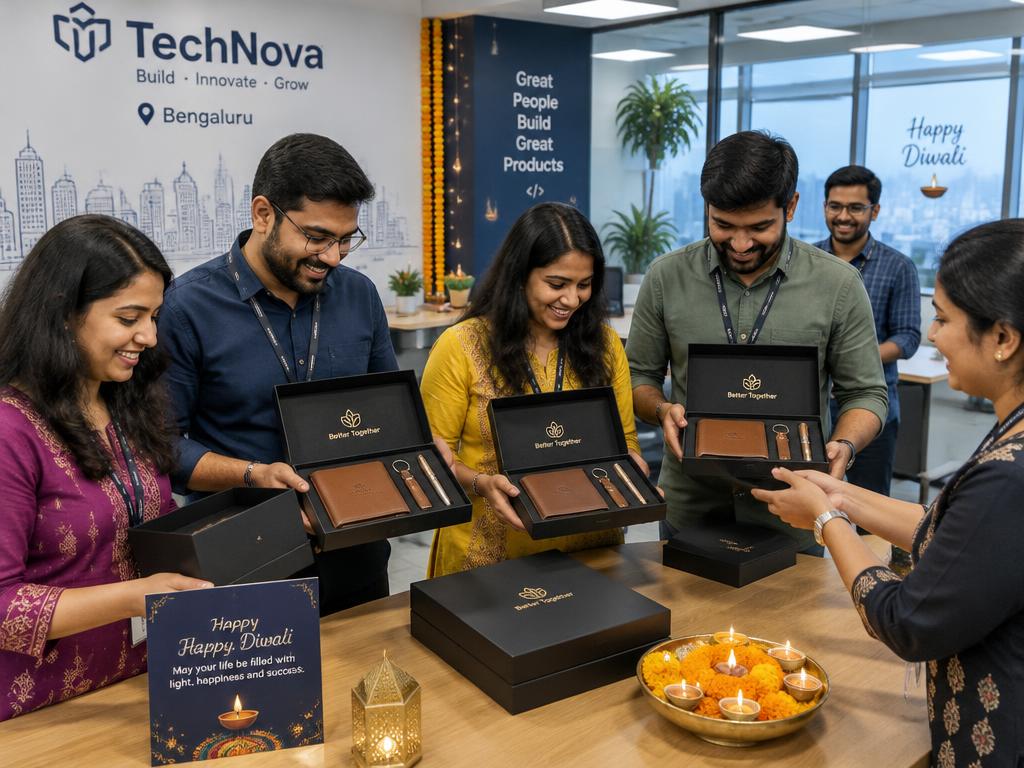
- Corporate HR and procurement teams buying gifting programmes — joining kits, long-service awards, channel-partner sets, Diwali hampers, often with individual names on the pieces.
- Hotels, restaurant groups and hospital or equipment suppliers ordering menu covers, room folders, bill folders and fitted device cases to a drawing.
What this market's mix looks like
The lines Indian buyers ask us for most often are pu leather medical device cases, leather tote bags, leather instrument cases, leather duffel bags, leather briefcases, leather eyewear cases. We make 41 lines in all, in genuine, PU and vegan materials, and from 100 pieces per design on most of them.
HSN classification: what goes on each invoice line
Every line on your invoice carries an HSN code, and the heading depends on what the article is rather than on what you call it. Getting it right at quotation stage matters more than it sounds: it decides the tax head on the invoice, it decides what your accounts team can reconcile, and it is far easier to agree before production than to amend after a credit note has already been raised.
| Heading | What sits there in a typical Indian order |
|---|---|
| HSN 4202 — Trunks, briefcases, handbags, wallets, cases and similar containers | In this market's top ten: pu leather medical device cases, leather tote bags, leather instrument cases, leather duffel bags. Classification follows the outer surface, so the PU version of a style normally sits in a different subheading from the leather one. |
| HSN 4201 — Saddlery and harness, including collars and leads | Also produced here: leather pet accessories. |
| HSN 4203 — Articles of apparel and clothing accessories of leather | Also produced here: leather belts, leather jackets, leather aprons, leather gloves. |
| HSN 4205 — Other articles of leather | Also produced here: leather keychains, leather notebook covers, leather desk accessories, leather pen holders. A mixed gift set is usually classified by its dominant article rather than as a set. |
| HSN 9113 — Watch straps, bands and bracelets | Also produced here: leather watch straps. |
GST invoicing, e-way bills and the rules that actually apply
There is no import regime to navigate here, but there is a tax and documentation regime, and it is the part first-time buyers underestimate. The place of supply decides the tax head, the consignment value decides whether an e-way bill is generated, and your own turnover decides whether the invoice has to be e-invoiced with an IRN. None of that is negotiable at dispatch, so we settle it at purchase-order stage.
GST invoice with HSN per line
Every order is billed on a GST invoice showing the HSN code against each line. IGST applies on inter-state movement and CGST plus SGST within Uttar Pradesh. Your accounts team or CA should confirm the rate in force for your HSN before you budget.
E-way bill and delivery challan
For consignments above the applicable threshold value we generate the e-way bill before the vehicle leaves the unit. The transporter carries it with the delivery challan and the LR number, which is what your gate and stores team will ask for.
E-invoicing and IRN
If your business falls inside the e-invoicing turnover bracket we raise an IRN-registered invoice so the credit reconciles cleanly against your GSTR-2B instead of being chased at year end.
HSN classification for leather goods
4202 covers bags, cases, wallets and similar containers; 4203 covers leather apparel, belts and gloves; 4205 covers patches, desk pieces and cut components. The full 8-digit code sits on the invoice line.
What we need on your purchase order
GSTIN, registered billing address, ship-to address and a PO reference. Place of supply decides the tax head, so send the ship-to state even when everything goes to one city.
No customs step
A domestic sale needs no bill of lading, certificate of origin or customs broker. If you intend to re-export the goods yourself later, ask us at the order stage and we will prepare the documentation set in your own name instead.
The paperwork that travels with your consignment
A domestic order generates a short, specific document set. It is deliberately not an export set — there is no bill of lading, no certificate of origin and no shipping bill, because nothing crosses a border.
| Document | Raised by | What it is for |
|---|---|---|
| GST tax invoice | Us | Line-level description with the HSN code, quantity, rate, taxable value and the tax head split, against your GSTIN, billing address and PO reference exactly as you send them. |
| Delivery challan | Us | Travels with the load so your stores and gate team can receive against it without waiting for an invoice copy to arrive by email. |
| E-way bill | Us, before the vehicle leaves | Generated for consignments above the applicable threshold value, with the vehicle number updated if the load is transshipped en route. |
| Transporter lorry receipt | The transporter | The LR number and tracking reference, emailed the day the load moves. This is the reference to quote when you chase a delivery. |
| Final inspection report | Us | Photographs and the AQL result from the check before packing. Standard with every order, not an extra. |
| Carton labels and marks | Us, to your template | PO number, SKU, carton number and quantity printed as your warehouse wants them. Send the template with the order, not after production. |
| Personalisation list | You | For named gifting, the final spelling list in a single spreadsheet. Engraving happens after assembly, so a late list delays dispatch, not production. |
Road, rail and air-courier lanes from Kanpur
Everything dispatches from our unit in Kanpur. Which lane we use depends on the weight, the destination and the date you need the goods in hand — and on whether your consignee can take a full truck or needs a part-load dropped at a warehouse.
Packing, and why it matters on a road lane
Goods go into an individual dust or poly bag, an inner box where the retail pack calls for one, then 5-ply cartons with corner protection, strapped and labelled. Carton pack quantity is on the quotation. Domestic road freight handles cartons harder than a sea container does — the load is broken and rebuilt at every hub — so we strap rather than tape and we do not stack a soft bag under a hard-cased item.
| Lane | Typical transit | When it makes sense |
|---|---|---|
| Full-truck road | 2–6 days to most metros | One destination, enough volume to fill a vehicle. The cheapest per piece and the simplest to track, and the usual choice for a single-site retail or gifting delivery to Delhi, Mumbai, Bengaluru, Chennai, Hyderabad, Kolkata, Pune, Ahmedabad. |
| Part-load road | 2–6 days plus a day or two at the hub | Smaller consignments and multi-city splits. The load passes through a transporter hub, which is where the extra day comes from. |
| Rail parcel | A few days longer than road | Long-haul southern and eastern lanes where road haulage is slow, and the fallback when monsoon closes a highway. Booked as a parcel service from Kanpur and collected at the destination goods shed, so it suits a consignee with their own pick-up rather than a door delivery. |
| Air courier | Next working day to two days | Routed via Air courier via Lucknow (LKO) for urgent small consignments for urgent small consignments, or Delhi (DEL) for larger same-week air dispatch for a larger same-week dispatch. The right answer for a sample, a replacement, a trade-show set or a gifting batch that has run late — and expensive per kilogram, so air part of the order rather than all of it. |
| Multi-city split | As above, per leg | One order, several destinations, separate challans and e-way bills per leg. Tell us the city-wise split with the purchase order — it changes how the goods are packed and labelled, so it cannot be bolted on at dispatch. |
Delivery terms, payment and what a quotation must state
We quote and invoice in INR with GST shown separately against your GSTIN and PO reference. The payment split is 30–50% advance to confirm the order and book leather and hardware, balance before dispatch, by bank transfer, NEFT/RTGS or UPI. That split is written on the quotation; it is not renegotiated when the goods are packed.
Three ways the freight can be arranged
Which of these you pick changes the unit price on the quotation, so it belongs in the enquiry rather than in a conversation at dispatch.
- Door delivery — the price includes freight to your address and we carry the risk until the load is unloaded. Freight is shown separately on the invoice where it is charged.
- Ex-works Kanpur — you or your transporter collect from the unit. Cheaper on paper, and genuinely cheaper if you already move freight on that lane.
- Multi-city split — one order, several consignments, each with its own challan and e-way bill.
What to insist the quotation shows
Two quotations are only comparable when both state all of this. If one of them does not, ask before you compare the numbers.
- Unit price, and whether it is ex-works Kanpur or delivered to your city
- GST shown separately, with the HSN code against each line
- Minimum order per design, and whether colours can be split inside it
- Carton pack quantity and carton dimensions, so your warehouse can plan receiving
- Lead time counted from sample approval and receipt of the advance — not from the enquiry date
- Sampling and tooling charges, listed separately from the unit price
- Branding method and position, because the same logo prices differently foiled, debossed or laser-engraved
- Who pays the freight, whether it is paid or to-pay, and the validity date on the quotation
Working backwards from Diwali and the wedding season
The arithmetic is simple and most delays come from ignoring it. samples in 7–12 days, bulk in 30–45 days, and 2–6 days from dispatch to most cities — about 5–9 weeks from go-ahead to goods in hand on a new design. A repeat of a style we already hold the pattern and die for skips sampling entirely and runs 32–51 days.
Diwali corporate gifting
Diwali falls in October or November depending on the year, so work back from the date for your year. Book early — most corporate gifting programmes in the country land in the same six weeks.
Wedding and festive retail
The main North Indian wedding season runs from late October into February, with a second window in April and May.
Year-end and new-financial-year kits
Client gifting in March, then joining kits and channel-partner sets from April.
| Peak | Goods needed in hand by | Place the order by |
|---|---|---|
| Diwali corporate gifting | four weeks before Diwali | Count back about 9 weeks from that point in your target year |
| Wedding and festive retail | late October | late July |
| Year-end and new-financial-year kits | early March | early December |
Corporate gifting: the parts that go wrong
Gifting programmes fail on logistics far more often than on product. Four things cause almost all of it, and all four are fixable at the purchase-order stage.
- The name list arrives late. Engraving and foiling happen after assembly, on finished pieces, so a list that lands a week after sample approval pushes dispatch by a week. Send it with the PO even if a few spellings are still being checked.
- The city split changes after production. Packing, carton labelling and challans are all built around the split, so a change at that point means repacking rather than re-addressing.
- The box is specified after the product. Rigid boxes, sleeves and inserts have their own lead time and their own die; decide the presentation at the same time as the product, not when the product is ready.
- Nobody agreed who signs off colour. A screen is not a swatch. Approve a physical swatch and keep the counter-sample — it is the only reference that settles an argument later.
What we can brand and how
Blind debossing, hot-foil in gold, silver or a matched colour, laser engraving, metal logo plates, embossed or printed linings and woven labels. Individual names are normally laser-engraved or foiled. Tooling — a clicker die, a mould or a logo plate — is made once, charged once and kept on file in your name, so a repeat programme next year carries no tooling charge again.
Ordering from us if you intend to export later
Some Indian buyers buy domestically and then export themselves — a brand selling into the Gulf, a gifting company serving a client's overseas offices. That changes the documentation, and it has to be decided before we invoice rather than afterwards.
A plain domestic sale needs no bill of lading, no certificate of origin and no customs broker, because nothing leaves the country on our paperwork. If you intend to export the goods yourself, say so at the order stage: we will prepare the export documentation set in your own name instead, mark and label the cartons for the destination, and keep the origin marking and label artwork consistent with what that market expects.
Ready to start your order?
Send your brief and get a quotation and sampling plan within one working day.