Materials
Vegetable-Tanned vs Chrome-Tanned Leather: Pros, Cons & Uses
By the India Leather Manufacturer production teamUpdated 12 min read
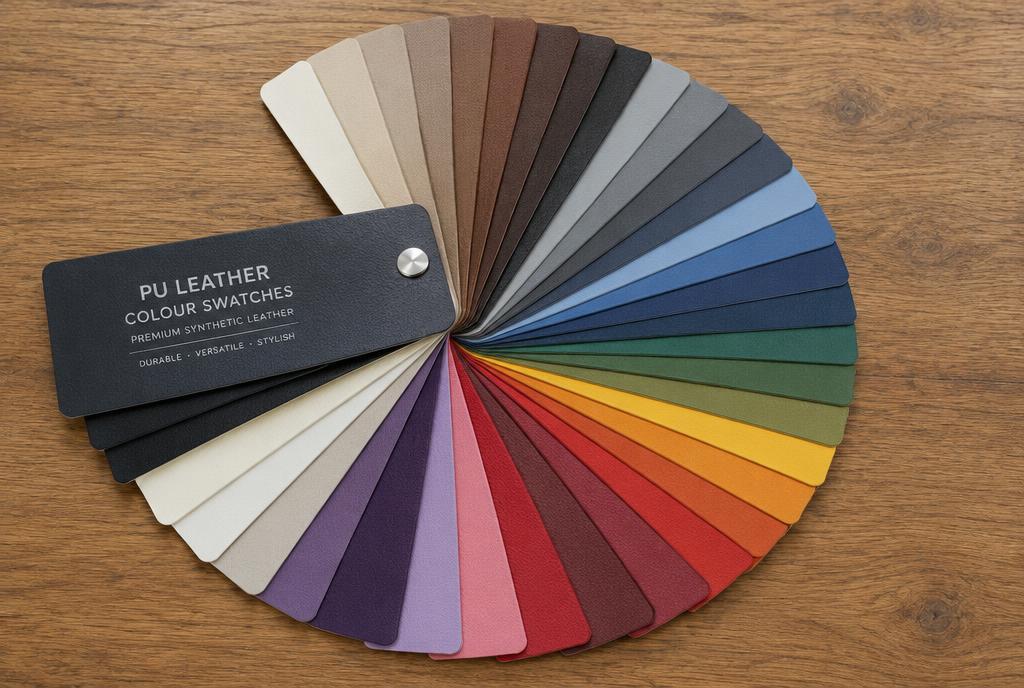
Quick answer
Vegetable tanning uses plant tannins over weeks and produces firm, body-rich leather that burnishes, debosses crisply and develops a patina. Chrome tanning uses chromium salts over a day or so and produces softer, more water-resistant leather available in a far wider and more repeatable colour range. Neither is a quality tier: they are different chemistries with different handling, and most ranges use both.
Key takeaways
- Tannage is a separate question from grade. A hide can be full-grain and chrome-tanned, or top-grain and vegetable-tanned.
- Veg-tan is the only tannage that burnishes properly, which is why slicked edges on belts and straps are a veg-tan signature.
- Chrome-tan holds a target shade far more tightly across lots, which matters more than romance on a programme of several thousand pieces.
- Chrome-free and combination tannages exist and are worth asking about when a specification restricts chromium outright.
- Chromium III is the tanning agent; chromium VI is the restricted substance buyers test for. Keep the two apart in your own documentation.
- Sustainability claims need evidence. Name the tannage and the tannery, get a drawn sample tested, and do not generalise beyond the order.
What tanning actually does, and why there is more than one way to do it
A raw hide is a protein structure that will rot. Tanning cross-links that structure so it becomes stable, flexible and resistant to water and micro-organisms — permanently. Every property a leather buyer cares about downstream, from how an edge burnishes to how tightly a colour can be held, descends from which chemistry did that cross-linking.
Two chemistries dominate leather goods. Vegetable tanning uses tannins extracted from bark, wood and fruit, worked into the hide in pits or drums over a period measured in weeks. Chrome tanning uses basic chromium sulphate and is largely complete in a day. Everything else — the handle, the colour range, the edge behaviour, the way it takes a deboss — follows from that difference in both chemistry and time.
Vegetable tanning: character, and the limits of it
Veg-tan leather is firm. It has body, it holds a shape, and a strap cut from it does not stretch out of recognition in a season. The fibre structure stays relatively open and uncoated, which is what allows it to absorb oils from handling and darken into a patina, and what allows an edge to be slicked and burnished to a hard polished finish with nothing but friction and a gum.
It also takes an impression better than anything else. A heated brass die pressed into vegetable-tanned leather produces a crisp, deep, permanent blind deboss, because there is enough dense uncoated material to compress. This is why heritage, saddlery and personalised ranges gravitate towards it.
The limits are real and worth stating plainly. The colour range is narrower and the shades are earthier; it will take dye, but it will not give you a bright saturated colour the way chrome-tan will. It marks and water-spots easily. It is heavier and stiffer, which rules it out for a soft unstructured bag body. Lot-to-lot shade variation is wider, because there is no heavy pigment layer evening things out. And the tanning time is weeks, which makes it the tannage most likely to put a lead time at risk if the article is not already in stock.
Chrome tanning: versatility, and the limits of it
Chrome-tanned leather is softer, more supple and more water-resistant straight off the drum, and it holds those properties in use. It accepts dyes and pigments across the full colour range, including bright and saturated shades, and because much of the colour sits in a finish layer it can be held to a target far more tightly across hides and across lots. For anyone running several thousand pieces in a seasonal colour, that repeatability is the single most important property in this article.
Its limits mirror veg-tan's advantages. It will not burnish — the edge has to be painted or turned instead, which is a construction decision rather than a preference. A blind deboss on a soft, heavily finished chrome-tan reads shallow, and laser engraving on a pigmented or oily chrome-tan can burn pale or scorch unpredictably, which is why a strike-off on the actual article matters more here than anywhere else. And it does not patina in the way a buyer who has read about patina expects; it ages, it softens, it scuffs, but it does not deepen in the same way.
Side by side
Read the table as a list of trade-offs rather than a scoreboard. The only rows that should settle a decision on their own are the edge-finishing row, the deboss row and the shade-repeatability row, because those are the three that change the construction or the risk on your run rather than just the feel of it.
| Attribute | Vegetable-tanned | Chrome-tanned |
|---|---|---|
| Tanning agent | Plant tannins from bark, wood and fruit | Basic chromium sulphate (chromium III) |
| Typical tanning time | Weeks, in pits or drums | Around a day |
| Handle | Firm, with body; holds a shape | Soft and supple from the start |
| Colour range | Earthier and narrower; takes dye but not bright saturation | Full range including bright and saturated shades |
| Shade repeatability across lots | Wider tolerance; lot swatch approval matters | Tight, particularly on pigmented finishes |
| Edge finishing | Burnishes to a slicked polished edge | Edge paint or turned edge; will not burnish |
| Blind deboss | Crisp and deep — the best substrate for it | Shallower on soft, heavily finished articles |
| Patina | Darkens and enriches with handling | Softens and scuffs rather than patinating |
| Water behaviour | Spots and darkens readily | More water-resistant |
| Where it belongs | Belts, straps, saddlery, wallets, heritage ranges, personalised pieces | Handbags, soft bodies, linings, seasonal colour, volume programmes |
Chrome-free, combination and the other tannages worth knowing
The conversation is not binary. Chrome-free leathers are tanned with aldehyde or synthetic tanning agents instead of chromium salts, and they give you much of chrome-tan's softness and colour range without chromium in the article at all. They are the right answer when a buyer's own restricted-substance policy rules chromium out as a matter of principle rather than of testing.
Combination or semi-vegetable tannages start with one chemistry and retan with another — typically chrome-tanned then vegetable-retanned — to get a leather with more body than a straight chrome-tan and more colour range than a straight veg-tan. A large share of what is sold as 'vegetable-tanned' in the general market is in fact a combination tannage, which is one reason to ask for the tannery's article name rather than a category.
If your specification restricts chromium, write it as a restriction on the finished article and ask what the tannery can supply against it, rather than writing 'vegetable-tanned' and assuming the two are the same request. They are not.
Chrome-free in practice
Chrome-free articles behave much more like chrome-tan than like veg-tan on the floor: they stay soft, they take the colour range, and they will not burnish. The practical differences are availability and price. Fewer articles are stocked, so confirm that the specific article will still be available for a repeat order in twelve months before you build a long-running programme on it.
Retannage is why two 'veg-tan' quotations differ
Where one supplier quotes a full vegetable tannage and another quotes a chrome-tanned, vegetable-retanned article, both may describe the leather as vegetable-tanned in an email and the two will not behave the same. The first burnishes and patinates fully; the second holds colour better and has less body. Ask for the tannery's article name and the tannage sequence, and settle it on a physical swatch rather than on terminology.
What the tannage changes on our factory floor
Tannage is not an abstract material property; it changes what the line does.
- Edge finishing: burnished raw edge is available only on veg-tan. On chrome-tan, specify edge paint in two to three coats with sanding between, or a turned edge on lined panels
- Branding: a blind deboss is the obvious choice on veg-tan; on pigmented or oily chrome-tan expect to compare a deboss, a foil and a laser on a strike-off before choosing
- Cutting: firmer veg-tan cuts cleanly on the clicker press but is less forgiving on tight radii; soft chrome-tan needs more care to avoid stretch on the die
- Skiving: veg-tan skives predictably; very soft chrome-tan can drag, which is why the skive depth is specified rather than left to the operator
- Colour control: on aniline, pull-up and veg-tan articles we book the leather for a whole run from one lot and send a lot swatch for approval before cutting
- Lead time: a veg-tan article that is not in stock is the most likely single cause of a sampling delay, because the tanning itself takes weeks
Chromium VI: the question buyers actually ask
The substance restriction that comes up on nearly every European enquiry is chromium VI in finished leather, and it is worth being precise about what is being discussed. Chrome tanning uses chromium III, which is the tanning agent. Chromium VI is a different oxidation state that can form under certain conditions in finished leather, and it is the one that appears as a restricted entry under the EU and UK REACH regimes. Azo colourants are the other entry that comes up regularly.
What a factory can honestly offer here is testing, not a blanket claim. We can have a drawn sample from your order tested by a third-party laboratory you nominate; that report covers the order it was drawn from, and it is not a standing certification of everything we make. Outside the EU and UK the regimes differ — Switzerland runs its own chemicals ordinances, Turkey operates a REACH-equivalent registration scheme, and buyers shipping into California commonly write their own lead, cadmium and phthalate limits into the specification for hardware, zips and coatings.
The practical approach is to send us the limits you need rather than ask whether we comply with a general standard. We will quote materials against written limits and arrange the test; interpreting the regime for your market stays with you and your importer.
Choosing a tannage by product
Treat this as a default to argue with rather than a rule. A programme that wants veg-tan's look on a soft bag body can often get most of the way there with a combination-tanned article, and a corporate range that wants a patina story can run veg-tan on the small goods and chrome-tan on the bags without anyone noticing a mismatch.
| Product | Usual choice | Why |
|---|---|---|
| Belts and straps | Vegetable-tanned full-grain | Structural tension, burnished edges, and it does not stretch out |
| Wallets and card holders | Either — veg-tan for patina, chrome-tan for colour | Folding and skiving matter more than tannage; decide on the look you are selling |
| Soft handbags and clutches | Chrome-tanned | Drape and softness; veg-tan will not hang correctly |
| Structured bags and briefcases | Combination or firm chrome-tan | Needs body without the weight and stiffness of a full veg-tan |
| Watch straps | Vegetable-tanned | Firm, slim, burnishes cleanly and patinates against the skin |
| Device cases and covers | Chrome-tanned top-grain | Wraps a tight radius, holds colour, and the lining does the protecting |
| Corporate gifting ranges | Chrome-tanned or embossed corrected grain | Shade consistency across a single branded programme is non-negotiable |
| Personalised and engraved pieces | Vegetable-tanned | Takes a crisp deboss and a controllable laser tone |
Sustainability claims you can and cannot make
Veg-tan is widely perceived as the more sustainable tannage, and there is a reasonable basis for the perception: plant tannins rather than metal salts, and a slower, more traditional process. But the honest position is that tannery management matters more than chemistry. A well-run chrome tannery with effluent treatment and recovery has a very different profile from a badly run one, and the same is true of vegetable tanning, which is water-intensive and produces its own effluent load.
What a brand can defensibly say is narrow and specific: the tannage used, the tannery, the species, and the results of any test performed on a drawn sample from the order. What it should not say is anything general about an industry, a country or a process that it cannot evidence. If your marketing copy needs to go further than that, the evidence has to come from a third-party scheme you join and audit, not from a supplier's assurance in an email.
European buyers increasingly ask about hide traceability as well as chemistry. We can state species, tannery and tannage for an order. What is in scope under the EU deforestation rules for cattle products — and when — has moved more than once, so ask your broker what currently applies to your heading rather than relying on a supplier's reading of it.
Ready to start your order?
Send your brief and get a quotation and sampling plan within one working day.